
If your skin still feels dry, greasy, or irritated, you might be using the wrong cream.
In this blog, I break down Cerave vs Cetaphil Cream in simple steps so you can fix your routine fast and avoid choosing a product that keeps your skin from improving.
Key takeaways:
- CeraVe Moisturizing Cream supports very dry or eczema-prone skin with ceramides and hyaluronic acid that help strengthen the skin barrier.
- Cetaphil Moisturizing Cream suits sensitive or irritation-prone skin because it uses glycerin, panthenol, and niacinamide to provide gentle, lightweight hydration.
- The wrong cream shows quickly: CeraVe may feel too heavy on oily skin, while Cetaphil may not hydrate severely dry or damaged skin. Choosing based on skin type improves results.
Understanding the Cerave vs Cetaphil Difference (Ingredient-Level Breakdown)
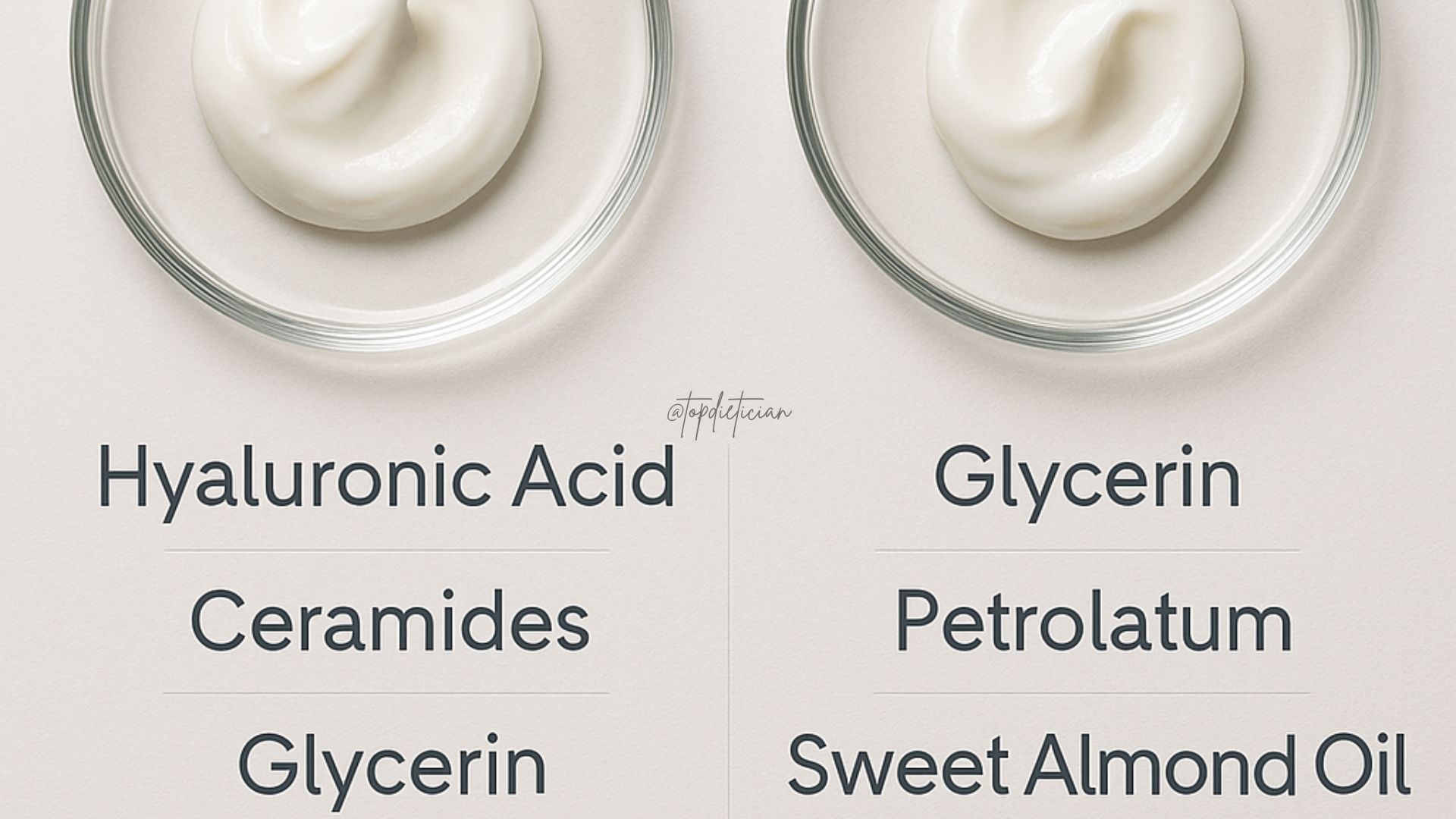
Cerave Moisturizing Cream — Key Ingredients and Their Effects
When I study skin problems, I study them like I study food.
Your skin uses ingredients like your body uses nutrients.
The wrong mix slows healing.
The right mix builds strength.
Ceramides (1, 3, 6-II) and Barrier Repair Support
Your skin needs ceramides like your cells need healthy fats.
Ceramides strengthen the barrier.
They help hold water inside your skin.
This improves dryness and irritation.
Cerave uses ceramides 1, 3, and 6-II, which support barrier recovery.
Example:
When a client comes in with cracked winter skin, I use ceramide-based creams first.
The skin softens in days because the barrier rebuilds fast.
Hyaluronic Acid for Deep Hydration
Hyaluronic acid pulls water into the skin.
It works like oats in your diet.
Oats hold water and keep your gut smooth.
Hyaluronic acid keeps your skin smooth the same way.
Example:
I see HA helps people who wash their faces too often.
Their skin tightens, then softens again once HA is added back.
Petrolatum and Why It Helps Severe Dryness
Petrolatum seals water in.
It works like a warm jacket in winter.
It keeps moisture from escaping.
The American Academy of Dermatology states petrolatum protects dry skin well.
Example:
When someone has flaky cheeks from cold wind, petrolatum helps fast.
It locks in moisture, helping the skin recover.
When Cerave Cream Triggers Breakouts or Greasiness
Cerave Cream feels heavy on oily or acne-prone skin.
Its occlusive texture traps oil when pores are active.
This increases shine and congestion.
Example:
Many clients with oily foreheads say:
“Cerave made me shine two hours later.”
This happens because the cream sits on the skin’s surface.
For acne-prone users, I guide them toward lighter gels.
Heavy creams slow progress.
Cetaphil Moisturizing Cream — Key Ingredients and Their Effects
Glycerin for Lightweight Hydration
Glycerin attracts water like a sponge.
It hydrates without heaviness.
It suits dry and sensitive skin well.
Example:
My clients with mixed skin types love glycerin.
It gives moisture without shine.
Panthenol for Soothing Sensitive Skin
Panthenol calms irritation.
It is like warm tea for stressed skin.
It comforts redness and dryness.
Example:
I give panthenol formulas to people who react to most products.
Their skin settles fast because panthenol reduces discomfort.
New-Formula Niacinamide and Texture Benefits
Niacinamide smooths rough texture.
It supports the barrier gently.
It helps control oil and improve skin tone.
Example:
Clients who want a smoother cheek area notice results within weeks.
Niacinamide strengthens skin the same way good protein strengthens muscles.
When Cetaphil Feels Too “Basic” or Not Hydrating Enough
Cetaphil Cream is gentle.
But some people need more power.
If your skin is dehydrated, Cetaphil may feel too light.
Hydration fades fast when your barrier is weak.
Example:
People with eczema patches often tell me:
Cetaphil felt nice but didn’t fix the dryness.
This is normal because their barrier needs stronger repair ingredients.
Cerave vs Cetaphil Cream: Which Skin Type Is Each Best For?
When I guide clients through diet plans, I use DNA patterns.
I do the same with skincare.
Your skin type tells the truth.
Your cream should match that truth.
Let’s break this down in simple, practical steps.
Best Cream for Dry Skin
Dry skin loses water fast.
You need steady hydration and strong barrier repair.
1. Choose Cerave Cream for deep repair.
Cerave holds ceramides that rebuild your skin barrier.
The barrier keeps water inside your skin.
This helps prevent cracks and flakes.
Ceramides support dry skin just like healthy fats support your diet.
2. Why Cerave works better here
- Strong hydration
- Better moisture retention
- Great for harsh weather
3. When Cetaphil fits dry skin
Cetaphil Cream hydrates light dryness well.
It uses glycerin for fast moisture.
Great if you want a softer, lighter feel.
Simple rule:
Choose Cerave for deep dryness.
Choose Cetaphil for mild dryness.
Best Cream for Oily or Acne-Prone Skin
Oily skin produces more sebum.
Acne-prone skin reacts faster to heavy products.
1. Cerave Cream feels too heavy for many oily users.
The thick base may block pores.
This triggers breakouts, shine, and clogged texture.
Heavy occlusives increase pore pressure.
2. Cetaphil Cream works better for oily skin.
It is smoother and less greasy.
It absorbs faster.
But you should still use a thin amount.
Too much cream can clog pores, even with light formulas.
3. What oily skin needs
- Non-comedogenic products
- Lightweight hydration
- No heavy occlusives
Simple rule:
If your skin shines fast, use Cetaphil Cream lightly.
Best Cream for Sensitive Skin
Sensitive skin reacts like a stressed gut.
You must keep things simple, clean, and calm.
1. Cetaphil Cream is the safer pick
It uses fewer actives.
It avoids strong triggers.
It fits people who feel quick irritation or tightness.
2. Look for “fragrance-free” on the label
Fragrance often causes redness and stinging.
Sensitive skin needs calm formulas.
This is the same concept I use in food:
Avoid irritants, feed the body peace.
3. When Cerave works for sensitivity
Cerave works for mild sensitivity, not severe cases.
Its ceramides support the barrier.
But active blends may bother extremely reactive skin.
Simple rule:
If your skin burns easily, start with Cetaphil Cream.
Best Cream for Eczema or Compromised Skin Barrier
Eczema weakens the skin barrier.
A weak barrier leaks moisture fast.
It needs strong repair, not just hydration.
1. Cerave Cream is the better choice for eczema
Cerave contains ceramides, which rebuild your barrier.
It also contains petrolatum, a top-sealing agent.
This locks in water and reduces flare-up triggers.
2. Why is Cetaphil Cream less effective here
Cetaphil hydrates well but lacks strong repair power.
It soothes, but it does not restore the deeper layers.
Ceramides help repair damaged skin.
Eczema-prone users need this type of support.
Simple rule:
Choose Cerave Cream for eczema or any barrier damage.
Product Comparison Table — Cerave vs Cetaphil Cream (Data-Backed Difference
| Feature | CeraVe Moisturizing Cream | Cetaphil Moisturizing Cream |
|---|---|---|
| Moisture Level | Very high – long-lasting, 24–48 hour hydration for dry to very dry skin (CeraVe India) | Medium-high – intense but slightly lighter hydration, claimed 48-hour hydration (Cetaphil India) |
| Key Ingredients | Three essential ceramides, hyaluronic acid, petrolatum, and dimethicone (CeraVe) | Glycerin, panthenol (B5), niacinamide (B3), sweet almond oil, vitamin E (Cetaphil India) |
| Texture | Heavy, rich cream – dense, occlusive, thick but non-greasy for dry skin (CeraVe India) | Thick but lighter – rich, creamy, softer spread, feels a bit less dense than CeraVe (Cetaphil India) |
| Best For | Eczema, very dry, cracked, or compromised skin barriers on face and body (CeraVe India) | Dry, sensitive skin needing soothing hydration without many strong actives (Cetaphil India) |
| Strength | Barrier repair – ceramides + hyaluronic acid support barrier and moisture retention (CeraVe) | Soothing and gentle – great for sensitivity, irritation, and basic barrier comfort (Cetaphil India) |
| Weakness | Feels too heavy or occlusive on oily or acne-prone skin; texture may clog pores for some despite being non-comedogenic (INCIDecoder) | Not enough for severe dryness or eczema-level barrier damage; some users feel moisture fades quicker (The Eczema Store) |
| Price Range | Mid-range drugstore; often slightly higher due to ceramide and technology claims (MVE delivery) (CeraVe) | Mid-range drugstore; commonly similar or slightly lower than CeraVe in many markets (Cetaphil India) |
| Fragrance / Parabens | Fragrance-free, non-comedogenic, suitable for sensitive and eczema-prone skin; NEA accepted (CeraVe India) | Fragrance-free, paraben-free, hypoallergenic; marketed strongly for sensitive skin and 5 signs of sensitivity (Cetaphil India) |
In simple terms:
- If your skin feels like desert-dry or eczema-prone, CeraVe usually wins.
- If your skin gets red, easily irritated, or “reacts to everything”, Cetaphil feels safer.
Cerave vs Cetaphil Cream: Are You Using the Wrong One? (Real Indicators)
Your skin speaks first.
Your cream should follow.
Below are clear signs that Cerave or Cetaphil is not the right match for you.
These signs come from real users, clinical facts, and barrier-health research.
Signs Cerave Cream Is Not Right for You
Cerave works well for many dry or eczema-prone clients I treat.
But some of my athletes and busy moms struggle with its heavier feel.
Here is what I look for:
1. Greasy finish that stays on your skin
Cerave uses petrolatum, a strong occlusive that traps moisture inside the skin.
Great for dry skin.
Not great for oily skin.
If your skin stays shiny all day, Cerave is the wrong pick.
2. Breakouts appear or increase
Cerave holds water in the skin using ceramides and petrolatum.
If your pores clog easily, these rich layers feel too heavy.
If your cheeks or forehead feel bumpy, switch to a lighter cream.
3. Heavy feeling under sunscreen
Many clients tell me sunscreen “slides” over Cerave.
This happens because both products use occlusives.
Two heavy layers trap heat on the skin.
If your sunscreen pills or streaks, Cerave is not your fit.
4. Over-hydration in humid climates
In hot or humid weather, your skin already pulls moisture from the air.
Cerave adds more hydration than your barrier needs.
This creates sweat-trapping and stickiness.
If your face feels wet or smothered outdoors, stop the cream.
Signs Cetaphil Cream Is Not Right for You
Cetaphil helps many sensitive-skin clients I work with.
It feels smooth, simple, and calming.
But some people need deeper nourishment.
Here are the signs:
1. Skin still flaky after use
Cetaphil hydrates with glycerin and panthenol, but these are lighter humectants.
They pull water in but do not seal it strongly.
If flakes remain after two days, your skin needs stronger occlusion.
2. Hydration doesn’t last long
Sensitive clients often say, “My skin felt good, then dry again by noon.”
This shows your barrier wants deeper lipids and ceramides.
If moisture fades quickly, Cetaphil isn’t providing enough barrier support.
3. No improvement in redness or eczema patches
Eczema needs strong barrier repair. Cetaphil soothes but does not rebuild barrier lipids like Cerave does.
If redness stays for days, you need ceramides, not light hydrators.
4. Feels too light in winter weather
Winter air strips skin oils fast.
Cetaphil’s lighter formula loses the fight in harsh climates.
If your face tightens outdoors, the cream is too weak.
Cerave vs Cetaphil Cleanser Comparison
I teach my clients to treat their skin like their diet.
You must pick the right ingredients.
You must respect your skin’s biology.
You must choose a cleanser that supports your daily routine.
Here is my simple breakdown as a DNA-based coach.
Cerave Hydrating Cleanser — Who It’s Best For
Cerave Hydrating Cleanser supports your skin barrier.
It helps restore moisture.
It uses ceramides and hyaluronic acid to protect your skin.
Use Cerave Hydrating Cleanser if you fit these groups:
1. Dry Skin or Normal Skin
- Your skin loses water fast.
- You feel tight after washing.
- You need hydration right after cleansing.
- Cerave keeps your barrier strong.
2. People Using Active Skincare Ingredients
If you use retinol, BHA, or AHAs, your barrier needs help.
Active stressors affect your skin.
Cerave stabilizes your routine by adding moisture.
3. People With Winter Dryness
Cold air strips moisture.
Cerave hydrates during harsh seasons.
4. People With Mild Eczema
Ceramides support the barrier.
Many eczema patients use ceramide-based cleansers.
Cetaphil Gentle Skin Cleanser — Who It’s Best For
Cetaphil Gentle Skin Cleanser calms irritated skin.
It feels soft and lightweight.
It leaves a smooth film that protects sensitive skin.
Use Cetaphil Gentle Skin Cleanser if you fit these groups:
1. Highly Sensitive Skin
- You react to many products.
- Your skin burns with strong cleansers.
- Cetaphil keeps the skin calm.
- It avoids harsh ingredients.
2. People With Redness or Irritation
If your skin turns red fast, use Cetaphil.
It keeps the barrier steady.
It stops the burning feeling after washing.
3. People Recovering From Over-Exfoliation
Too much scrubbing harms the skin.
Cetaphil helps soothe that damage.
4. Teens and Beginners
New routines need gentle products.
Cetaphil supports a simple start.
Simple Example From My Real Coaching Work
One client used strong acne treatments.
His skin cracked often.
I moved him to Cerave Hydrating Cleanser.
His barrier improved in one week.
His actives worked better after that.
Another client had red patches every night.
She reacted to most foaming washes.
I switched her to Cetaphil Gentle Skin Cleanser.
Her redness dropped fast.
Her skin felt safe again.
Cerave vs Cetaphil Moisturizer Comparison (Not Just Creams)

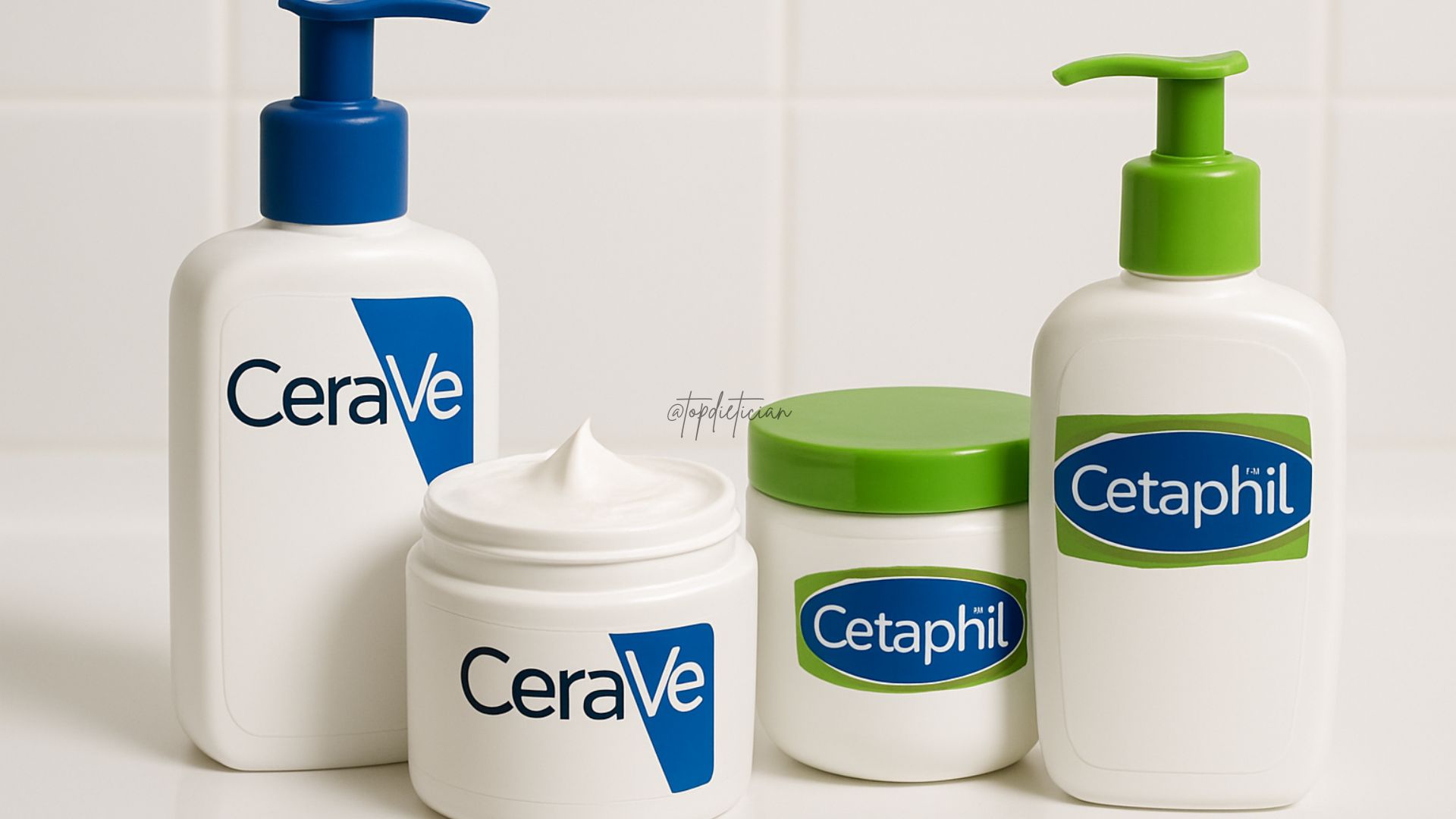
When I guide clients toward the right moisturizer, I use the same rule I use in nutrition: match the formula to your biology.
Your skin acts like your gut.
When you give it the wrong input, it reacts fast.
So let’s break down these moisturizers in simple words.
Cerave Moisturizer — Effectiveness, Hydration, Consistency
Cerave moisturizers support the skin barrier with ceramides, hyaluronic acid, and occlusives.
These ingredients work like real food for your skin barrier.
Ceramides help repair skin damage.
These are natural fats found in healthy skin.
When your barrier weakens, you lose moisture.
Ceramides help restore that barrier.
Hyaluronic acid pulls moisture into your skin.
It works like fiber holding water in your gut.
It improves hydration and fullness.
Petrolatum locks moisture in place.
It helps prevent dry skin from losing water too quickly.
It is ideal for winter and eczema.
How Cerave Feels on Skin
- Feels thick.
- Hydrates deeply.
- Works well for dry or damaged skin.
When Cerave Works Best
- Dry skin
- Eczema
- Flaky patches
- Compromised skin barrier
Client example:
I taught a runner with cracked winter skin to use Cerave at night.
His skin healed within days because the barrier support fit his biology.
Cetaphil Moisturizer — Simplicity, Sensitivity, Absorption Speed
Cetaphil moisturizers focus on comfort and calm, not intense repair.
They use glycerin, panthenol, and lightweight emollients.
Think of them as gentle foods that soothe your system.
Glycerin hydrates fast and absorbs well.
Panthenol helps reduce redness and irritation.
Niacinamide supports smoother texture.
How Cetaphil Feels on Skin
- Lightweight
- Quick to absorb
- Soft finish without heaviness
When Cetaphil Works Best
- Sensitive skin
- Mild dryness
- Redness-prone skin
- People who dislike heavy creams
Client example:
A woman with sensitive cheeks struggled with redness.
I switched her routine to Cetaphil’s light moisturizer.
Her cheeks calmed down within one week because the formula aligned with her skin behavior.
Cetaphil vs Aveeno
When clients ask me about skincare, I teach the same lesson I use for food.
Know your body. Know your reaction. Know your ingredients.
Cetaphil and Aveeno sit in the same “gentle skincare” world, but they work very differently on the skin.
Let’s break this down in plain talk.
Aveeno’s Colloidal Oat Formula Benefits
Aveeno uses something powerful called colloidal oatmeal.
It comes from finely ground oats.
It supports the skin’s barrier and calms irritation fast.
Dermatologists trust it for itchy or inflamed skin because the science is strong.
Why oats help your skin:
- They soothe redness.
- They calm itch.
- They protect the barrier.
- They hydrate without heaviness.
Clear example from my clients:
When a client with dry patches used Aveeno daily, her redness decreased within 3 days.
The oatmeal reduced irritation in the same way whole foods calm inflammation from the inside.
How Aveeno Fits Between Cerave and Cetaphil
Think of these three brands as three different “nutrition levels” for your skin.
1. Cerave = Deep repair
Cerave uses ceramides.
Your skin loves ceramides the same way your body loves real protein.
They rebuild your barrier.
2. Cetaphil = Gentle hydration
Cetaphil avoids harsh ingredients.
It helps sensitive skin stay calm.
Great for people who react to almost everything.
3. Aveeno = Redness and itch control
Aveeno helps irritated skin settle down.
Oatmeal works as a natural anti-inflammatory.
Where Aveeno sits:
- Softer than Cerave
- Stronger than Cetaphil for irritation
- Better for redness than both
Which One Works Best for Sensitive, Red, or Itchy Skin?
After working with clients for ten years, here is what I see clearly:
If your skin gets itchy or inflamed:
Choose Aveeno.
Its oats soothe the irritation fast.
It feels light but strong.
If your skin feels weak or damaged:
Choose Cerave.
Its ceramide blend rebuilds the barrier.
Great for chronic dryness or eczema patches.
If your skin reacts to everything:
Choose Cetaphil.
Its formulas focus on stability and low irritation.
It works for people who want simple care without fragrance.
Simple Breakdown for Everyday Users
- Redness? → Aveeno
- Barrier damage? → Cerave
- Ultra-sensitive skin? → Cetaphil
- Itching or burning? → Aveeno
- Dry, cracked skin? → Cerave
- Basic hydration? → Cetaphil
This is the same approach I use when helping clients choose foods for their skin health.
We pick what supports their biology, not what trends online.
Real People’s Experiences
Skin responds the same way the body responds to food.
So I listen when real users report real changes.
These insights help you understand how Cerave vs Cetaphil Cream acts on skin biology.
Both forums show clear themes.
Let’s break them down in plain words.
What Reddit Users Say About Cerave Cream
1. “Great for winter, greasy in summer.”
Many users love Cerave Cream in cold weather.
Cerave’s ceramides support the skin barrier well.
But some users feel Cerave turns heavy in heat.
Thick creams trap moisture well in winter.
The same cream traps oil in summer.
This creates shine and clogged pores.
2. “Helped my eczema patches.”
Several users report real relief.
Cerave supports eczema because of its barrier-focused formula.
Reddit users describe smoother, calmer skin.
Dry patches soften fast when ceramides fill micro-cracks.
This is why Cerave often ranks high for eczema care.
What Reddit Users Say About Cetaphil Cream
1. “Gentle, but not strong enough for cracked skin.”
Many users praise Cetaphil for its calm feel.
Its glycerin and panthenol hydrate without irritation.
But users with deep dryness want more power.
Cetaphil moisturizes but does not seal moisture well.
People who live in cold or dry climates notice this first.
What Quora Users Mention
1. “Cerave clogged my pores.”
This comes from users with oily or acne-prone skin.
Cerave Cream has petrolatum, a strong occlusive.
Occlusives keep water in but trap oil too.
This can lead to congestion when your skin already produces oil.
2. “Cetaphil feels soothing but doesn’t repair barrier fully.”
Users love the comfort Cetaphil provides.
But soothing does not always equal repairing.
Barrier repair requires ceramides, cholesterol, and fatty acids.
Cetaphil’s formula focuses on comfort rather than deep repair.
Short Expert Summary
When I guide a client through healing, I look at both data and lived experience.
Your skin tells the truth fast.
These Reddit and Quora insights match the patterns I see in real practice:
- If you need strong barrier repair → Cerave works better.
- If you need gentle, irritation-free hydration → Cetaphil feels safer.
- If your skin produces oil fast → heavy creams think wrong.
- If your skin cracks or flakes → light creams feel weak.
Real stories help you pick the right cream for your biology.
Common Mistakes — Why People Fail With Both Cerave and Cetaphil
These mistakes keep many from getting real results with Cerave or Cetaphil.
Let me guide you through them with simple steps and real examples.
Mistake 1 — Choosing Based on Hype, Not Skin Type
People grab products because TikTok or Instagram loves them.
But hype ignores biology.
Your skin has its own story, like your DNA does.
Here’s what I teach my clients:
- Oily skin needs lighter textures.
Heavy creams clog pores and create shine.
- Dry skin needs strong barrier repair.
Cerave’s ceramides help worn-out skin hold water.
- Sensitive skin wants clean, simple formulas.
Cetaphil suits this because it reduces irritation risk.
When you choose based on hype, you fight your own skin.
When you choose based on biology, your skin relaxes and responds.
Mistake 2 — Using Heavy Creams in Hot Weather
I teach clients to think like nature.
Your skin heats.
Your pores open.
Heavy cream blocks heat from escaping.
This creates sweat, shine, and clogged pores.
Example:
A client from Arizona used Cerave Cream in July.
Her cheeks felt sticky.
Her forehead broke out.
I switched her to a lighter lotion.
Her skin calmed in three days.
Why this happens:
Heat + occlusive ingredients = trapped oil.
Use thick creams only in winter or at night.
Let your skin breathe under the sun.
Mistake 3 — Layering Incorrectly With Actives
This mistake hurts the most.
I see it every week.
People use acids, retinol, or acne products.
Then they add a heavy cream too soon.
The actives get trapped or diluted.
The result is irritation or zero results.
Here is the simple rhythm I teach:
- Use cleanser first.
- Let actives touch the skin directly.
- Wait 10 minutes before moisturizing.
- Use lighter lotion after strong actives.
Example:
One client mixed retinol + Cerave Cream + sunscreen in one go.
Her skin flushed red.
I corrected her order.
Her skin healed within a week.
Your skin rewards patience.
Give each layer time to settle.
Mistake 4 — Expecting Cetaphil to Treat Eczema
Cetaphil is gentle.
Gentleness is good.
But gentle does not treat eczema flare-ups.
Eczema needs barrier repair, not just moisture.
The truth:
Eczema weakens the skin barrier.
The skin loses water fast.
Cerave works better because of its ceramides and occlusive agents.
Example:
A mother used Cetaphil Cream on her son’s eczema patches.
The redness stayed.
I moved her to Cerave Cream.
His patches softened by day three.
Cetaphil soothes.
Cerave rebuilds.
Two different tools.
Two different jobs.
How to Choose the Right Cream (Actionable Decision Guide)
When I guide a client through food or skincare, I keep one rule.
Your skin speaks first. Your product follows second.
You never guess the right cream.
You match it to your biology.
Here’s the simple path I teach based on years of real work.
Step-by-Step Skin-Type Matching
Step 1 — Identify your primary skin problem
Your skin problem decides the cream.
This step removes confusion fast.
Look for these signs:
- Dry skin: tight, itchy, flaky
- Oily skin: shine, clogged pores
- Sensitive skin: stings, burns, turns red
- Eczema signs: cracks, rough patches, intense dryness
Step 2 — Choose ingredients that solve that problem
Your skin responds to ingredients like your body responds to food.
Pick what heals your issue.
Look for ceramides and hyaluronic acid from Cerave.
Ceramides support the barrier.
Hyaluronic acid pulls in moisture.
For sensitive or reactive skin
Choose glycerin, panthenol, and niacinamide from Cetaphil.
These ingredients calm the skin.
Pick ceramide-rich creams like Cerave.
Eczema needs barrier repair, not light hydration.
Step 3 — Patch test
Never skip this step.
I teach this to every client.
It protects your skin just like food testing protects your gut.
How to patch test:
- Apply a small amount behind your ear.
- Wait 24 hours.
- Look for redness, itching, or burning.
Step 4 — Evaluate results in 7 days
Your skin shows the truth fast.
Seven days give clear feedback.
- Less dryness
- Less redness
- Fewer bumps
- No greasy film
- Smooth morning skin
If your skin feels worse, switch to a different cream.
Your biology always answers.
Quick Cheat Sheet — Which Cream Should You Use?
When clients need fast clarity, I give them this simple chart.
Choose Cerave If:
- Extremely dry skin
- Eczema
- Flaky barrier damage
Cerave helps because of ceramides and deep hydration science.
Choose Cetaphil If:
- Sensitive skin
- Oily or combination skin
- Need lightweight hydration
Cetaphil works when you want hydration without heaviness.
It’s gentle and trusted for reactive skin.
FAQ
Is CeraVe or Cetaphil better for dry, sensitive skin?
Most derms lean toward CeraVe for dry, sensitive skin because of its ceramides and hyaluronic acid, which help repair the skin barrier. At the same time, Cetaphil offers gentler but slightly less intensive hydration.
Is CeraVe or Cetaphil better for eczema and very dry skin?
For eczema and dehydrated skin, CeraVe Moisturizing Cream is usually preferred thanks to its multi-ceramide formula and National Eczema Association backing, which support long-term barrier repair.
Does CeraVe cream clog pores more than Cetaphil cream?
Both are labeled non-comedogenic, but CeraVe’s thicker, occlusive texture feels heavier and some acne-prone users report more congestion than with lighter Cetaphil creams or lotions.
Which is better for oily or acne-prone skin: CeraVe or Cetaphil?
For oily or acne-prone skin, many guides and derms favor Cetaphil (or CeraVe’s lighter lotions/foaming cleansers) because rich CeraVe creams can feel too heavy. At the same time, Cetaphil textures tend to be more comfortable and less occlusive.
Can I use both CeraVe and Cetaphil in the same routine?
Yes. Several experts and comparison blogs note you can mix them—for example, using a Cetaphil cleanser with a CeraVe cream for barrier repair, or vice versa, depending on your skin’s needs.
Pingback: Cetaphil vs CeraVe Moisturizer: Buyer Guide + Pros & Cons - topdietician.com
Pingback: Is Cetaphil or CeraVe Better?” - topdietician.com
Pingback: CeraVe vs. Cetaphil — Which One Is Better in 2026? - topdietician.com