
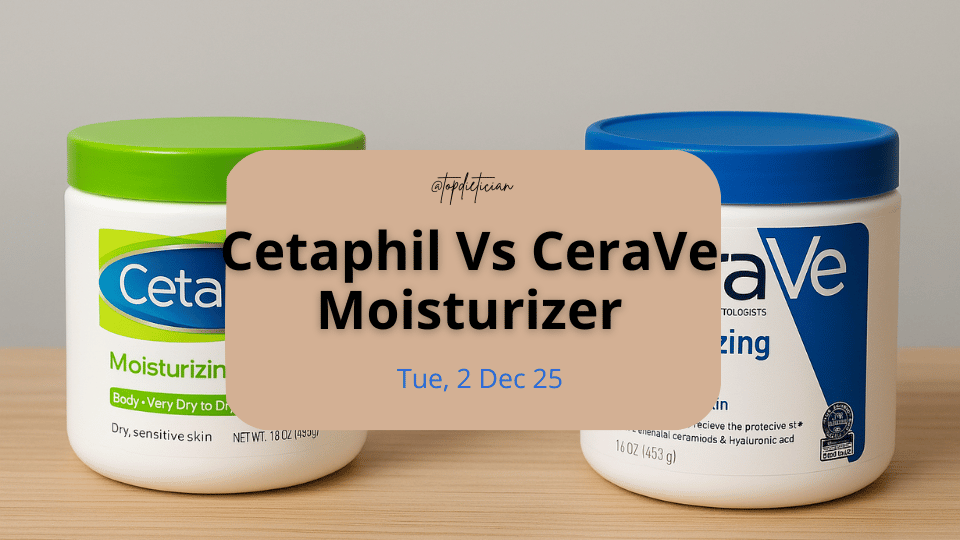
We both know how frustrating it is to choose between Cetaphil and CeraVe. Pick the wrong one, and your skin reacts fast.
So I made this guide to help you find the right moisturizer today and stop the dryness, breakouts, and irritation before they get worse.
Key Takeaways:
- CeraVe works best for dry, very dry, and eczema-prone skin. Its ceramides and hyaluronic acid repair the skin barrier and give long-lasting hydration.
- Cetaphil is better for sensitive, oily, or acne-prone skin. Its lighter, simpler formulas hydrate without heavy, pore-clogging layers.
- There is no single winner; match product to skin and climate. Use lighter lotions in hot, humid weather and richer creams in cold, dry conditions.
Why Cetaphil vs CeraVe Moisturizer Comparison Matters
Choosing between Cetaphil and CeraVe is one of the top problems I hear.
Both products look similar. Both promise calm, hydrated skin. But each one works in a very different way. When you pick the wrong moisturizer, you fight dryness, clogged pores, and irritation for months.
When you choose the right one, your skin stays balanced, just as your body does with the proper diet.
Cetaphil vs CeraVe moisturizer comparison matters because your skin barrier functions like your gut. Treat it right, and the whole system improves.
Treat it wrong, and everything feels off.
Why People Are Confused Between Cetaphil vs CeraVe Moisturizer
People get confused for three reasons:
1. Both are dermatologist-recommended
Dermatologists trust both brands because they use gentle formulas.
2. Both are affordable and easy to find
You see them everywhere—drugstores, supermarkets, and online stores.
This makes people think they work the same. They don’t.
3. They treat different skin needs
This is where the confusion hits hardest.
- CeraVe uses ceramides and hyaluronic acid to repair your barrier.
- Cetaphil uses gentle humectants, such as glycerin, and focuses on calming sensitive skin.
So the packaging looks similar, but the mission behind each moisturizer is very different. You pick one based on your skin’s behavior, just as I guide clients to choose foods based on how their bodies respond.
Common Questions People Search
People ask the same questions we talk about during real coaching sessions. These are the exact queries filling today’s SERPs:
1. “Is Cetaphil or CeraVe better for dry skin?”
Dry skin needs stronger barrier support.
That makes CeraVe a top pick for many people with dryness.
2. “Which moisturizer won’t clog pores?”
Light textures reduce pore blockage.
Cetaphil’s lotion is popular with people who want a clean, breathable finish.
3. “Is CeraVe good for acne-prone skin?”
Acne-prone skin needs hydration without heaviness.
CeraVe’s lotion works well for those who want moisture with ceramides.
Cream versions feel heavier, so the lotion is the smarter fit.
4. “Which is best for sensitive skin?”
Sensitive skin needs fewer triggers.
Cetaphil’s simple, calm formulas are ideal for this goal.
Ingredient Breakdown — What’s Inside & How It Affects Your Skin
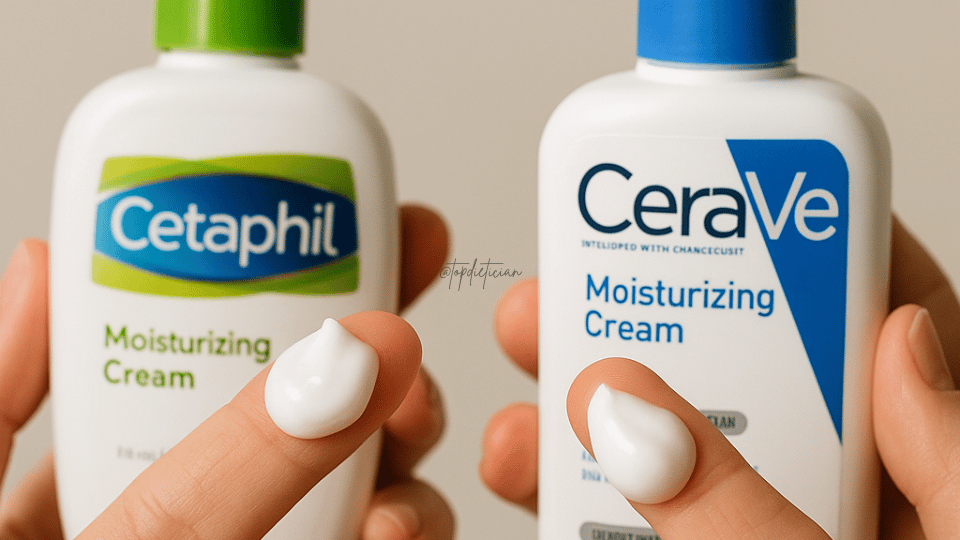
The best place to start is the ingredient list. When you understand what each ingredient does, picking the right moisturizer becomes easy and stress-free.
Key Ingredients in CeraVe Moisturizers
Ceramides (1, 3, and 6-II)
Ceramides act like the skin’s natural glue. They hold your outer skin layers together and stop water from escaping.
They also block outside irritants.
What ceramides do:
- Strengthen your skin’s barrier.
- Reduce redness and dryness.
- Support healing after irritation.
You and I see weak skin barriers every day. Cold air, hot showers, or harsh face washes damage the barrier fast. Ceramides fix that damage with steady support.
Why do they repair a damaged barrier:
- Ceramides replace the lipids your skin loses.
- They fill the “gaps” in dry, cracked skin.
- They restore balance without causing oil buildup.
Best for:
Hyaluronic Acid
Hyaluronic Acid, or HA, acts like a water magnet.
You and I need that when the skin loses moisture fast.
How HA attracts and holds moisture:
- It pulls water from the air.
- It stores water inside the skin’s top layers.
- It gives a smooth, plump look within minutes.
HA hydrates without heaviness. It works well in morning routines and under sunscreen.
Best for:
- Dehydrated skin
- Flaky skin
- Tight or dull skin
When a client’s skin looks flat or feels papery, HA restores volume and softness.
MVE Technology
CeraVe uses MVE Technology to slowly release moisture.
This keeps hydration steady throughout the day.
How MVE works:
- It releases ingredients layer by layer.
- It prevents the quick “dry-out” you get from weak moisturizers.
- It gives your skin steady comfort while you move, sweat, or face dry air.
You and I see people reapplying cheap moisturizers all day. MVE stops that cycle.
Best for:
- Long-lasting hydration
- Winter dryness
- Skin exposed to heaters or AC for long hours
Clients who train outdoors or work in dry air get better results with MVE formulas because moisture stays locked in.
Key Ingredients in Cetaphil Moisturizers
I want you to understand every ingredient the same way you understand food labels—short sentences. Clear points. No fluff. Just the truth about what touches your skin.
Glycerin
Glycerin works like a water magnet. It pulls moisture toward your skin and keeps it there. That’s why it feels smooth without the greasy mess.
Here’s how it helps you:
- Gentle hydration without heavy buildup.
- Great for oily or sensitive skin, because it absorbs fast.
- Doesn’t clog pores, even in humid weather.
- Protects your skin barrier, just like clean hydration protects your muscles after a workout.
A quick example: I tell my clients to think of glycerin like a sponge. It pulls in water and holds it. That’s why your skin stays soft longer.
Niacinamide (in some formulas)
Niacinamide supports the skin barrier the same way smart nutrition supports your gut. Your skin stays calm, balanced, and less reactive.
Here’s what it does:
- Reduces redness by lowering surface inflammation.
- Strengthens your moisture barrier, so your skin stops losing water.
- Controls extra oil, which helps during sweat-heavy workouts.
- Helps acne-prone skin stay clear without harsh ingredients.
Example: When I work with clients who break out under stress, niacinamide keeps the skin balanced, just as magnesium keeps your muscles relaxed.
Simpler Formulation
Cetaphil sticks to simple formulas. That means fewer ingredients that fight for attention on your skin.
Why this matters:
- Fewer actives = lower irritation risk.
- Perfect for sensitive skin, fragrance-reactive skin, and people who flush easily.
- Easy to pair with sunscreen, serums, or prescription-free routines.
- Works for clients who want clean, predictable results, not gimmicks.
Example: Think of this like a clean grocery list. When you pick real foods with short ingredient lists, your body responds better. Your skin acts the same way.
Ingredient Comparison Table
You and I care what goes on skin. Ingredients decide results. This table shows the fundamental differences.
| Ingredient / Feature | CeraVe Moisturizers | Cetaphil Moisturizers | What It Means for You |
|---|---|---|---|
| Ceramides | Uses three essential ceramides (1,3,6-II) in many creams and lotions. (CeraVe India) | Some formulas use ceramides, but many classic moisturizers skip them. (Cetaphil) | Stronger barrier repair. Better for dry, damaged, or eczema-prone skin. |
| Hyaluronic Acid | Added to key products for deep water binding and plump skin. | Present in some lines, not all core moisturizers. | Better long-lasting hydration with CeraVe when skin feels tight or dull. |
| Glycerin | High levels of glycerin in most creams and lotions. | Glycerin sits at the heart of many Cetaphil formulas. | Both brands pull water into skin. Gentle hydration for daily use. |
| Niacinamide | Used in several face and night creams for calming and repairing. | Present in many modern Cetaphil lines for sensitive and redness-prone skin. | Helps reduce redness. Supports barrier. Good for sensitive or reactive skin. |
| Panthenol (Pro-vitamin B5) | Appears in select products, often as a soothing helper. | Key soothing active in many moisturizers. | Extra calming power in Cetaphil for stressed or sensitive skin. |
| Cholesterol and skin-identical lipids | Uses cholesterol and multiple skin-identical lipids to support the barrier. | Focus stays on emollients and humectants, fewer barrier lipids. | CeraVe gives a stronger “mortar” for cracked, rough, winter-damaged skin. |
| Signature Technology | Uses MVE slow-release technology for 24-hour hydration. | Uses simpler emulsion systems without slow-release tech. | CeraVe holds moisture longer. Great for very dry or busy days. |
| Texture and Weight | Often richer, creamier, more occlusive, especially body and barrier creams. | Often lighter, more lotion-like, especially face products. | CeraVe suits dry or cold climates. Cetaphil suits humid or oily-leaning skin. |
| Comedogenic Risk | Formulas are non-comedogenic, though rich textures feel heavy on oily skin. | Also non-comedogenic; lighter feel suits acne-prone and teen skin. | For breakout-prone skin, Cetaphil lotions feel safer and less heavy. |
| Fragrance and Sensitizers | Most lines stay fragrance-free and suitable for sensitive skin. | Core moisturizers are also fragrance-free and hypoallergenic. | Both brands respect sensitive skin. Good for long-term daily use. |
| Barrier Focus vs. Comfort Focus | Strong barrier repair focus: ceramides, HA, cholesterol, MVE delivery. | Strong comfort and soothing focus: glycerin, panthenol, niacinamide. | CeraVe rebuilds structure. Cetaphil calms and comforts sensitive, touchy skin. |
1. Ceramides: CeraVe leads for barrier repair
- Ceramides act like the “cement” between skin cells.
- CeraVe Moisturizing Cream loads three essential ceramides.
- These lipids restore a weak skin barrier and cut dryness.
- Cetaphil adds ceramides to some new products, not to most of its classics.
So:
- For cracked, rough, eczema-prone skin, CeraVe gives stronger repair.
2. Hyaluronic Acid: deeper hydration from CeraVe lines
- Hyaluronic acid holds water like a sponge in the skin.
- CeraVe puts it in core creams for dehydrated skin.
- Cetaphil uses it in select products but not every main cream.
So:
- When skin feels tight and dull, CeraVe provides deeper hydration.
3. Glycerin and Panthenol: comfort strength from Cetaphil
- Both brands use glycerin for steady, gentle moisture.
- Cetaphil goes further with panthenol and sweet almond oil in many creams.
- These soothe, soften, and ease surface dryness very quickly.
So:
- If your main issues are sensitivity and tightness, Cetaphil feels very soothing.
4. Texture: heavy support vs. light daily wear
- CeraVe creams feel richer and more occlusive.
- They work like a thick blanket for skin in winter.
- Cetaphil lotions feel lighter and more breathable.
- They suit humid weather and oil-prone faces very well.
So:
- Cold, dry climate or intense dryness → CeraVe.
- Hot, humid weather or oily T-zone → Cetaphil.
5. Technology: MVE vs. simple emulsion
- CeraVe uses MVE technology to release hydration throughout the day.
- Think of it like slow-release carbs for your skin barrier.
- Cetaphil uses classic cream bases without time-release tech.
So:
- If you want fewer reapplications and long workdays, CeraVe lasts longer.
6. Sensitive and acne-prone skin: how I decide
- Both brands maintain fragrance-free, non-comedogenic core lines.
- Rich CeraVe creams sometimes feel heavy on acne-prone faces.
- Cetaphil lotion provides hydration without a coating feeling.
Simple rule I use with clients:
- For breakouts plus dryness, start with Cetaphil lotion on face.
- Use CeraVe cream for body dry patches, elbows, and shins.
Real User Insights (Reddit & Quora Feedback)
As your DNA-Based Fitness Coach and dietitian, I always look at real-world skin feedback the same way I look at food logs—people tell the truth when their skin reacts.
These user insights help you and me understand how each moisturizer behaves on real skin, in real climates, with real problems.
Positive Feedback for CeraVe
1. Users with acne-prone skin report fewer breakouts.
A Reddit user wrote:
“Every time I used CeraVe, new pimples were way less frequent… I NEVER had clear skin with Cetaphil.”
This matches what I see with clients. Ceramides support your barrier. A strong barrier stays calm. Calm skin breaks out less.
2. People with eczema see real, visible changes.
Another Reddit user said:
“This moisturizer is a lifesaver for my eczema.”
The formula works because ceramides + hyaluronic acid pull in water and seal it. Dry, cracked skin responds well to that combo.
Negative Feedback for CeraVe
1. Some people deal with breakouts from the thicker textures.
A user shared:
“CeraVe made me break out so badly. I hate it.”
This happens when someone with oily or pore-clogged skin uses a cream meant for dry or damaged skin. Heavy creams suffocate oily skin the same way heavy meals slow digestion when your body needs lighter foods.
2. Users in humid places feel the product is too heavy.
A common complaint:
“Feels too heavy in humid weather.”
If you live in a hot, humid region, thicker creams trap sweat and oil. Lotions work better.
Positive Feedback for Cetaphil
1. Sensitive skin users trust it because it reacts less.
A Quora user shared:
“Cetaphil saved my sensitive skin when everything else broke me out.”
Cetaphil uses simpler formulas. Sensitive skin stays calmer with fewer actives. Think of it like clean whole foods—no extras, no triggers.
2. Ideal under sunscreen because it feels light.
One user said:
“Lightweight and perfect under sunscreen.”
Light lotions layer well under SPF. They don’t pill, and they don’t mix weird with sunscreen filters.
Negative Feedback for Cetaphil
1. Users in cold weather feel it lacks moisture.
A common complaint:
“Not enough moisture for winter.”
Winter air strips skin fast. Light lotions underperform. Your skin needs richer creams in dry cold months. This is the same logic I use when adjusting hydration for athletes in cold climates—they need more fuel and more moisture.
2. Hydration happens, but barrier repair doesn’t follow.
Another user said:
“Skin felt hydrated but not repaired.”
Cetaphil hydrates but doesn’t rebuild the barrier like ceramide-rich formulas. It’s like drinking water without electrolytes—you get hydration, but not complete recovery.
Product Comparison Table (Face + Body Moisturizers)
| Product | Best For | Texture | Pros | Cons |
|---|---|---|---|---|
| CeraVe Moisturizing Cream | Dry to dehydrated skin, rough patches, eczema, winter face + body | Rich, thick cream | • 3 essential ceramides for barrier repair • Hyaluronic acid for deep hydration • MVE tech for 24-hour moisture • Fragrance-free, non-comedogenic, eczema-friendly | • Feels heavy on oily or acne-prone skin • Too rich for humid or hot weather for many users |
| CeraVe Daily Moisturizing Lotion | Normal to dry skin, mild eczema, all-over daily use | Lightweight lotion | • Ceramides + hyaluronic acid for barrier and hydration • 24-hour hydration with MVE delivery • Non-greasy, non-comedogenic, oil-free | • Too light for very dry or cracked skin • Some users feel slight tackiness at first |
| Cetaphil Moisturising Lotion | Normal to dry, sensitive, oily-leaning, acne-prone skin, face + body | Light, smooth lotion | • Niacinamide, panthenol, glycerin, avocado oil for 48-hour hydration • Restores barrier in about one week • Fragrance-free, hypoallergenic, non-comedogenic • Great for sensitive and combo skin | • Not rich enough for harsh winter or very dry legs and hands • Some oily skins still feel it slightly greasy |
| Cetaphil Moisturising Cream | Dry to dehydrated, sensitive skin, face + body, winter or AC rooms | Medium-rich cream | • Niacinamide, panthenol, glycerin for 48-hour intense hydration • Clinically shown to restore barrier within a week • Rich but non-greasy for most users • Designed for dehydrated, sensitive skin | • Heavy for oily or acne-prone faces • May feel too occlusive in humid climates |
How I’d Explain the Differences to You as a Coach
I look at these four the same way I look at carbs, fats, and protein.
Each has a job.
Each fits a different body and climate.
1. CeraVe Moisturizing Cream = Heavy winter blanket
- It suits dehydrated, flaky, eczema-prone skin.
- Ceramides rebuild your skin barrier like bricks in a wall.
- Hyaluronic acid holds water inside that wall. (CeraVe India)
- Use it on cracked shins, rough arms, or tight winter cheeks.
If your skin is oily or you live in humid heat, this one feels too heavy.
2. CeraVe Daily Moisturizing Lotion = Everyday balanced meal
- It targets normal to dry skin that still needs comfort. (CeraVe India)
- Texture stays light but still gives ceramides and hyaluronic acid. (CeraVe India)
- I see it as a good choice for both face and body for daily use.
If your skin is dehydrated, you step up to the cream.
If your skin is oily, this lotion works when the air is dry but not boiling.
3. Cetaphil Moisturising Lotion = Gentle, light everyday fuel
- It focuses on sensitive, normal-to-dry, or slightly oily skin.
- Niacinamide and panthenol calm skin and support the barrier.
- Glycerin, avocado, and sunflower oil pull in and hold moisture.
- It stays light and works well under sunscreen and makeup.
For very dry winter legs or eczema patches, this feels too weak.
For oily or acne-prone skin needing gentle moisture, it usually hits the sweet spot.
4. Cetaphil Moisturising Cream = Rich but calmer comfort
- It is made for dehydrated, dry, sensitive skin.
- Formula uses niacinamide, panthenol, glycerin, plus almond oil.
- It gives 48-hour hydration in lab tests.
I treat it like a rich home-cooked stew.
Great when your skin feels starved and rough.
Too much when your face already feels oily or sticky.
Quick way to choose from this table
Dehydrated, itchy, eczema-prone skin?
- Go for CeraVe Cream or Cetaphil Cream.
- Pick CeraVe if you want extra barrier repair from ceramides.
Normal to dry, no significant issues, all-over use?
- CeraVe Lotion or Cetaphil Lotion both work.
- Choose CeraVe for a stronger barrier focus.
- Choose Cetaphil if your skin reacts easily.
Sensitive, easily irritated, post-treatment skin?
- I lean toward Cetaphil Lotion or Cream first
Hot, humid climate or sweaty workouts?
- Stick with light lotions, not thick creams.
- That means CeraVe Lotion or Cetaphil Lotion, not the rich tubs.
I look at your skin the way I look at your training plan.
Right product, correct dose, right conditions.
That is how we keep your skin firm, hydrated, and calm without overdoing it.
How to Choose — Step-by-Step Decision Guide
Healthy skin protects your body just like strong muscles protect your joints.
So let’s pick the right moisturizer with a method that actually works.
Step 1 — Identify Your Skin Type
If You Have Dry or Dehydrated Skin
Choose:
CeraVe Moisturizing Cream or
CeraVe Daily Moisturizing Lotion
Why:
- These formulas use ceramides. They rebuild your skin barrier.
- They also include hyaluronic acid, which pulls water into your skin.
- You get deeper hydration and long-lasting comfort.
Simple example:
If your skin feels tight after a shower, CeraVe fixes that fast.
If You Have Oily or Acne-Prone Skin
Choose:
Cetaphil Moisturizing Lotion
Why:
- The texture stays light on your skin.
- The formula avoids heavy oils.
- This reduces clogged pores and breakouts.
Simple example:
If your T-zone shines by noon, Cetaphil keeps it under control.
If You Have Sensitive or Reactive Skin
Choose:
Cetaphil Moisturizers
Why:
- Fewer active ingredients reduce irritation.
- The formulas stay calm on inflamed or stressed skin.
Simple example:
If new products irritate your cheeks, Cetaphil protects you.
Step 2 — Consider Climate
Hot & Humid Weather (India, SEA, Middle East Summers)
Do this:
- Use light lotions. Your skin stays breathable.
- Pick Cetaphil lotion or CeraVe lotion.
Avoid:
- Heavy creams. They trap sweat and trigger breakouts.
Simple example:
If you sweat while walking outside, skip rich creams.
Cold & Dry Weather (Winter, AC-Heavy Rooms)
Do this:
- Use rich creams. They lock moisture in.
- CeraVe Cream works extremely well for winter dryness.
Simple example:
If your skin flakes near your nose, you need richer products.
Step 3 — Think About Your Skin Concerns
If You Have Eczema or Rosacea
Choose:
CeraVe Moisturizing Cream
Why:
- Ceramides restore damaged skin.
- Dermatologists trust ceramides for eczema repair.
Simple example:
If your skin burns after washing, CeraVe calms it down.
If You Deal With Acne
Choose:
Light lotions such as:
- Cetaphil Lotion
- CeraVe Daily Moisturizing Lotion
Why:
- Lighter textures avoid pore blockage.
- Skin stays hydrated without greasiness.
Avoid:
- Thick creams that suffocate your pores.
Simple example:
If your forehead breaks out easily, avoid heavy moisturizers.
Step 4 — Patch Test Properly
Do this:
- Apply a small amount behind your ear or on your jawline.
- Test for three days.
- Watch for redness, bumps, or itchiness.
Why it matters:
Your skin tells the truth faster than any label.
Step 5 — Adjust Based on Season
Summer Routine
- Use Cetaphil lotion or CeraVe lotion.
- They stay light and sweat-friendly.
Winter Routine
- Use CeraVe Cream or Cetaphil Cream.
- Richer textures protect your skin barrier.
Simple example:
Just like you change your workouts by season, change your moisturizer too.
Which Is Better for Specific Skin Concerns?
Your skin responds to the right ingredients the same way your muscles respond to the right nutrients. You need the right match. No guessing. No confusion. So let’s break this down in simple words that guide you fast.
Best for Dry Skin
Winner: CeraVe (ceramides + hyaluronic acid)
Dry skin loses water fast. It needs ingredients that lock moisture in and repair the barrier.
Here’s why CeraVe wins:
- It feeds your skin ceramides.
- It pulls in water with hyaluronic acid.
- It helps maintain hydration throughout the day.
- It strengthens your barrier like protein strengthens muscle.
Example
If your cheeks feel tight after washing or you see small flakes around your nose, CeraVe fills those cracks and stops the dryness at the root.
Best for Oily or Acne-Prone Skin
Winner: Cetaphil Lotion
Oily or acne-prone skin needs moisture too. But it needs light humidity. Heavy creams block pores and trigger breakouts.
Here’s why Cetaphil lotion works better:
- It feels light on your skin.
- It absorbs fast.
- It avoids heavy ingredients that sit on the surface.
- It supports hydration without clogging pores.
Example
If your forehead gets shiny at noon or you break out from rich creams, Cetaphil lotion keeps your skin balanced and calm.
Best for Sensitive Skin
Winner: Cetaphil
Sensitive skin reacts fast. It doesn’t want long ingredient lists. It wants simple formulas that let the skin breathe.
Here’s why Cetaphil takes the lead:
- It uses gentle hydrants like glycerin.
- It avoids irritation triggers.
- It stays mild even when skin feels stressed.
- It keeps your barrier steady and calm.
Example
If your skin turns red after trying new products or even after weather changes, Cetaphil gives you steady support without flare-ups.
Best for Eczema or Rosacea
Winner: CeraVe Cream
Eczema and rosacea need barrier support. They need moisture that stays. They need ingredients that rebuild what’s damaged.
Here’s why CeraVe cream delivers:
- It restores lost ceramides.
- It reduces dryness that triggers flare-ups.
- It keeps moisture locked in through day and night.
- It creates a protective layer without feeling greasy.
Example
If you see dry patches on your arms or cheeks or experience burning after washing, CeraVe cream helps your skin stay steady and protected.
FAQs
Is CeraVe or Cetaphil better for dry skin?
I trust CeraVe when my skin feels tight and rough. Its ceramides and hyaluronic acid draw water deep into the skin. That locks in moisture long after you wash. If your cheeks or hands crack in cold air, CeraVe softly repairs and soothes dryness.
When to choose CeraVe:
- Skin feels flaky or rough.
- You sense tightness after a bath or shower.
- You live in cold or dry weather.
Which moisturizer won’t clog pores?
I lean toward Cetaphil Lotion if skin tends to break out. Cetaphil stays light on skin. It does not sit heavily or block sweat pores. That lowers the risk of bumps or pimples. If your skin gets greasy fast midday, Cetaphil lets it breathe and stay calm.
Good sign you picked non-clogging moisturizer:
- Skin feels soft, not sticky.
- You don’t wake up with new pimples.
- You sweat under the sun, but your skin stays clear.
Is CeraVe good for acne-prone skin?
Yes — if you choose the lighter CeraVe lotion, not the heavy cream. The lotion delivers ceramides and hydration without leaving a thick oil residue. It hydrates without clogging pores. For acne-prone skin needing softness, CeraVe lotion works well.
Use CeraVe lotion when:
- You want hydration but avoid heaviness.
- You had breakouts from rich creams.
- You wash your face daily and need steady moisture.
Can I use Cetaphil or CeraVe every day?
Yes — you and I both know consistency builds health. Daily use helps skin stay balanced. Just choose the correct variant: light lotion in heat, richer cream in cold. Clean skin, then apply moisturizer. That simple daily habit protects the skin barrier and keeps the glow.
Which is better for humid weather?
In humid air, I trust light lotions—like Cetaphil or CeraVe. Heavy creams feel sticky. Light lotions hydrate without weight. They mix well with sweat and sun. That keeps skin smooth, not oily or blocked.
Can I use these moisturizers under makeup?
Yes — exceptionally light lotions from Cetaphil or CeraVe. They absorb fast. Skin stays soft, not greasy. Makeup layers easily. Moist skin holds makeup better. Use lotion — wait 2–3 minutes, then apply sunscreen or makeup. Skin looks fresh and healthy.
Pingback: Cetaphil Cleanser vs CeraVe: The Clear Winner in 2026 Revealed - topdietician.com
Pingback: CeraVe vs Cetaphil Cleanser: The Clear Winner for 2026 - topdietician.com
Pingback: Is Cetaphil or CeraVe Better? - topdietician.com
Pingback: Why the “Best Non Greasy Face Moisturizer” Search Matters - topdietician.com