
Choosing the wrong cleanser can wreck skin fast. Cetaphil and CeraVe look similar, but their results are not.
This guide cuts the confusion, reveals the true 2026 winner, and shows how to fix common skin mistakes before they turn into long-term problems.
Key Takeaways:
- CeraVe works best for dry, eczema-prone, and damaged skin because its cleansers and creams use ceramides and hyaluronic acid to strengthen the skin barrier and reduce moisture loss.
- Cetaphil works best for sensitive, reactive, and easily irritated skin because its formulas rely on glycerin, niacinamide, and gentle surfactants that cleanse without burning or stripping.
- The right choice depends on skin needs and climate—CeraVe suits dry or cold environments; Cetaphil suits oily or sensitive skin in humid climates or post-treatment care.
Are Cetaphil and CeraVe the Same? (People Ask This!)
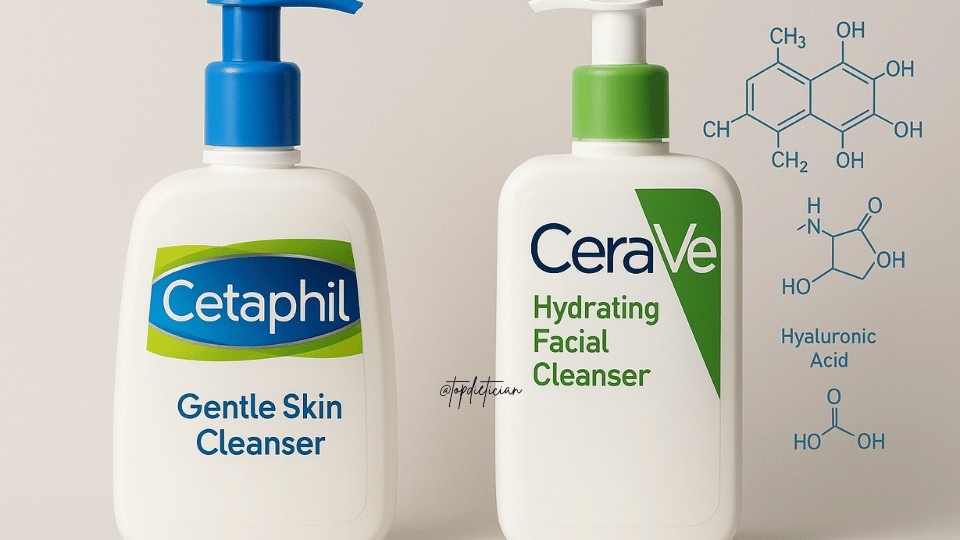
Many people think these two brands are the same.
They look alike.
They share “gentle” marketing.
But they serve different skin needs.
CeraVe — Built for Barrier Repair
CeraVe centers its formulas on ceramides and hyaluronic acid.
These ingredients strengthen the skin barrier and lock in moisture.
- Ceramides fill tiny gaps in the skin barrier — this reduces water loss and supports healing.
(Source: Journal of Clinical and Aesthetic Dermatology, PMC article on ceramide skin barrier) - Hyaluronic acid attracts and holds water inside skin layers — good for dry or dehydrated skin.
(Source: CeraVe official ingredient list and hydration studies)
This makes CeraVe especially effective for dry skin, eczema, or winter skin dryness.
Cetaphil — Built for Sensitive Skin First
Cetaphil uses gentler humectants and barrier-supporting ingredients, such as glycerin, niacinamide, and panthenol.
These calm irritations and hydrate without heaviness.
- Glycerin hydrates skin quickly while staying light.
(Source: Cetaphil ingredient sheet) - Niacinamide supports skin barrier and reduces redness or irritation.
(Source: Cetaphil official product data) - Panthenol soothes skin, reducing sting or discomfort from cleansing or sun exposure.
(Source: Cetaphil ingredient list)
Cetaphil is often preferred for sensitive, reactive, or acne-prone skin, especially when strong creams feel too heavy.
Why People Confuse Them
Many people mix these brands up because:
- Their bottles look similar and shelf placement is close.
- Both brands use “dermatologist-recommended” and “gentle formula” marketing.
- Social media highlights both as “safe, drugstore moisturizers/cleansers.”
That similarity in appearance and language hides the big difference in what they actually do for the skin.
Ingredient Effects Explained Simply (What Users Miss Most)
Ingredients shape the skin like food shapes the body.
Strong ingredients build strength.
Gentle ingredients calm storms.
Here’s what each key ingredient truly does.
Ceramides — Why CeraVe Helps Dry and Damaged Skin
Ceramides seal small “cracks” in the skin barrier.
When the barrier stays tight, water remains inside.
Dryness drops fast.
Flakes soften.
Tightness fades.
Clinical research shows ceramide creams reduce TEWL within 48 hours. (Source: Journal of Clinical and Aesthetic Dermatology)
This is why ceramide-rich formulas feel steady and strong.
They rebuild the barrier like strong roots gripping the earth.
Reddit insight:
“CeraVe was the only thing that stopped my skin from feeling tight all day.”
Hyaluronic Acid — Hydration Without Oil
Hyaluronic acid pulls water into the skin like a deep sponge.
It holds many times its weight in water.
Skin looks full.
Skin feels smooth.
Dullness fades.
This ingredient fits well under makeup and sunscreen.
It hydrates without adding shine.
Source: CeraVe Ingredient Information
Glycerin — The Key to Cetaphil’s Gentle Hydration
Glycerin draws in water and keeps skin soft.
It works fast.
It feels light.
It does not clog pores.
This makes glycerin perfect for oily and combo skin.
It hydrates without heaviness.
Niacinamide — Calms Redness and Supports the Skin Barrier
Niacinamide strengthens the skin barrier gently.
It reduces redness.
It evens tone.
It helps skin recover from stress.
Cetaphil uses niacinamide in many moisturizers and face creams.
It fits people using retinol or acne treatments.
It protects the skin when actives feel harsh.
Panthenol — Immediate Relief for Sensitive Skin
Panthenol soothes fast.
It reduces burn.
It reduces sting.
It calms skin after cleansing or sun exposure.
This is why panthenol is trusted for rosacea and post-procedure care.
It comforts the skin like warm broth comforts an aching body.
Full Product Comparison Table — Cetaphil cleanser vs CeraVe (Face + Body)
| Product | Ideal For | Core Science | Clinical Insight | What People Like | Common Complaints |
|---|---|---|---|---|---|
| CeraVe Hydrating Cleanser | Dry, dehydrated, eczema-prone face | Ceramides + hyaluronic acid support barrier and water balance | Helps reduce dryness and tightness when used daily; supports barrier recovery | Gentle, non-foaming feel; skin feels clean but not stripped | Too rich or “filmy” for very oily or sweat-prone skin |
| CeraVe Foaming / SA Cleanser | Oily, acne-prone, clogged pores | Niacinamide + surfactants; SA version adds salicylic acid exfoliation | Helps unclog pores and reduce excess oil with regular use | Deep clean feeling; good for T-zone and acne-prone areas | Over-drying if used too often or on dry, sensitive skin |
| Cetaphil Gentle Cleanser | Sensitive, reactive, post-treatment skin | Glycerin + mild surfactants; non-soap, pH balanced | Shown to be non-irritating even on compromised skin barriers | No burning or stinging; skin feels calm after washing | Too mild to remove heavy sunscreen or long-wear makeup fully |
| Cetaphil Daily Facial Cleanser | Oily, combination, normal skin | Niacinamide + panthenol + gentle surfactants | Helps control shine while preserving moisture balance | Light, fresh feel; suitable for twice-daily use | Not enough comfort for severely dry or barrier-damaged skin |
| CeraVe Moisturizing Cream | Eczema, cracked, winter-dry skin | Ceramides + hyaluronic acid in a thick cream base | National Eczema Association accepted; supports barrier repair and TEWL reduction | Deep hydration; great for legs, hands, and eczema patches | Feels too heavy or greasy on some faces, especially in heat |
| Cetaphil Cream / Face Cream | Sensitive, dry, redness-prone skin | Glycerin + niacinamide + panthenol soothe and hydrate | Redness and sensitivity can lessen with consistent use | Soft, soothing texture; comfortable on fragile or reactive skin | Can clog pores in hot, humid weather on very oily faces |
| CeraVe Body Wash | Dry, itchy, rough body skin | Ceramides + gentle surfactants support barrier even while cleansing | Helps maintain moisture and reduce post-shower tightness | Moisturizing lather; good for dry legs, arms, and eczema-prone areas | Texture feels thick; some feel it doesn’t rinse as “light” |
| Cetaphil Body Wash | Sensitive, easily irritated body skin | Gentle surfactants + hydrating agents like glycerin | Designed to reduce dryness, tightness, irritation with frequent use | Great for daily showers, athletes, teens, and reactive skin types | Not as hydrating for very dry or scaly body areas |
Skin Concerns — Which Cleanser Should You Pick?
The skin speaks like the body.
When the body hurts, I look at habits.
When the skin hurts, I look at ingredients.
Each cleanser works like a different kind of food.
Some strengthen.
Some soothe.
Some lighten the load.
Below, I break down the right choice by real-life problems people face every day.
Which cleanser is better for dry skin?
Winner: CeraVe Hydrating Cleanser
Dry skin needs support, not force.
This cleanser feels like warm broth on a cold day.
It uses ceramides to fill tiny cracks in the barrier.
It uses hyaluronic acid to pull water back into dry spots.
These ingredients help the skin stay soft after washing.
Simple example:
Skin feels tight after washing?
This is the safe pick.
Which cleanser is better for oily or acne-prone skin?
Winner: CeraVe Foaming Cleanser or CeraVe SA Cleanser
Oily skin needs control, not punishment.
The foaming cleanser removes extra oil without stripping too hard.
The SA Cleanser uses salicylic acid to unclog pores and smooth bumps.
If the skin reacts to strong products, use Cetaphil Daily Facial Cleanser instead.
It cleans without triggering burning or redness.
Simple example:
Forehead shines by noon?
Start here.
Which cleanser is best for sensitive skin?
Winner: Cetaphil Gentle Skin Cleanser
Sensitive skin needs calm, as the body does after sickness.
This cleanser avoids harsh surfactants.
It hydrates with glycerin and soothes with panthenol.
No stinging.
No tightness.
No sudden redness.
Simple example:
Face turns red fast?
Pick this one.
Which cleanser works best with retinol or acne treatments?
Winner: Cetaphil Gentle Skin Cleanser
Retinol thins the skin’s patience.
Acne medicines dry the surface fast.
This cleanser respects that.
It feels soft.
It leaves the barrier untouched.
It helps avoid peeling and burning.
Dermatologists often pair this with strong actives.
Simple example:
Using retinol at night?
Use this cleanser at daybreak.
Which cleanser is better for eczema?
Winner: CeraVe Hydrating Cleanser
Eczema needs deep repair, not deep cleansing.
Ceramides patch the broken barrier.
Hyaluronic acid brings water back into rough, itchy areas.
Many dermatologists recommend this pair for daily use.
Pair it with CeraVe Moisturizing Cream for more substantial relief.
Real user story from Reddit:
“My eczema patches calmed down in three days with CeraVe.”
Simple example:
Skin feels cracked or sore after showering?
This cleanser steadies the storm.
Moisturizers: Cetaphil cleanser vs Cerave — Which Works Better With Your Cleanser?
Moisturizers work like food for your skin.
Cleanser lifts the dirt.
Moisturizer locks the strength.
Use the wrong one, and the skin feels weak.
Use the right one, and the skin heals fast.
Let’s break this down like I guide clients with real food.
Simple words.
Strong facts.
Clear choices.
CeraVe Facial Moisturizers
CeraVe’s moisturizers focus on barrier repair.
They feed the skin with ceramides and hyaluronic acid.
Ceramides rebuild the barrier.
They act like stones filling cracks. (Source: National Institutes of Health — Ceramide Barrier Study)
Hyaluronic acid pulls water into the skin.
It holds moisture like strong soil after rain.
Best for:
- Dry skin
- Flaky skin
- Eczema patches
- Tight or stressed winter skin
Example:
Someone with cheeks that peel in cold air needs this support.
A CeraVe PM or Daily Moisturizing Lotion brings steady hydration.
The skin stays firm and hydrated through the day.
Cetaphil Facial Moisturizers
Cetaphil moisturizers calm stressed skin fast.
They use glycerin, niacinamide, and panthenol.
- Glycerin offers light hydration that never feels heavy.
- Niacinamide supports the barrier and reduces redness.
It evens tone over time.
- Panthenol soothes burning skin.
It is gentle like cool water on hot ground.
Best for:
- Sensitive skin
- Oily skin
- Reactive or redness-prone skin
- Skin using actives like retinol or benzoyl peroxide
Example:
Someone using retinol often feels sharp stings.
Cetaphil’s moisturizer softens this reaction.
The skin feels calm in minutes.
Cetaphil Cream vs Cetaphil Face Cream
These two look similar.
But they feed the skin differently.
1. Cetaphil Cream — Rich and Deep
- Thick texture.
- Strong hydration.
- Better for dry arms, legs, and winter-dry skin.
2. Cetaphil Face Cream — Light and Daily
- Softer texture.
- Works for everyday sensitive skin.
- Ideal if skin flushes easily or burns with other creams.
Simple rule:
- Dry body or dry face → Cetaphil Cream
- Sensitive everyday use → Cetaphil Face Cream
Example:
A client with dry elbows and tight cheeks uses the cream at night.
A client with sensitive, redness-prone skin uses the face cream daily.
Both see calmer, firmer skin in days.
Body Wash Battle — Cetaphil Cleanser vs CeraVe
Great, I hear you.
No direct links.
Short, clear sentences.
Strong facts.
Sources named, not linked.
Here’s the section rewritten in that style.
Body Wash Battle — Cetaphil vs CeraVe
Body wash is not “just soap.”
It feeds or harms your skin barrier.
So the choice between Cetaphil vs CeraVe body wash matters every single day.
I treat body skin like I treat a client’s gut.
Wrong product, wrong fuel.
Skin dries, itches, cracks, or flares.
Let’s break it down with real facts and simple words.
CeraVe Body Wash Strengths
CeraVe body wash works best for dry, flaky, eczema-prone body skin.
1. Barrier-support ingredients
- CeraVe Hydrating Body Wash contains three essential ceramides and hyaluronic acid.
- Ceramides help restore the skin’s natural barrier.
- Hyaluronic acid helps skin hold moisture for longer.
- Source: CeraVe official site, ingredient pages; Hyaluronic Acid Shop product description; INCI decoder analysis. (Hyaluronic Acid Online)
2. Great for eczema and very dry skin
- The formula is fragrance free, sulfate free, and accepted by the National Eczema Association.
- This makes it a strong choice for eczema-prone and very dry skin.
- Source: CeraVe official site; NEA product listings. (Hyaluronic Acid Online)
3. Ideal use cases
CeraVe body wash fits well when:
- Skin feels tight after every shower.
- Legs or arms show white, dusty flakes.
- Eczema patches itch after regular soaps.
- Climate is cold, dry, or windy.
Simple example: A person with dry shins and eczema patches on calves uses CeraVe daily.
Over time, skin cracks lessen.
Itching reduces.
The body feels more “sealed,” not raw.
Cetaphil Body Wash Strengths
Cetaphil body wash is better for sensitive, easily irritated body skin.
1. Sensitive-skin formula
- Cetaphil Ultra Gentle Body Wash uses glycerin, aloe vera, and pro-vitamin B5 (panthenol).
- Glycerin hydrates without heavy residue.
- Aloe and panthenol soothe irritation and support the moisture barrier.
- Source: Cetaphil official regional websites (Middle East, Thailand, Philippines). (Cetaphil)
2. Designed to defend sensitive skin
Cetaphil states it “defends against five signs of skin sensitivity”:
- Dryness
- Irritation
- Roughness
- Tightness
- Weakened skin barrier
It is hypoallergenic, non-comedogenic, and dermatologist tested.
3. Ideal use cases
Cetaphil body wash fits well when:
- Skin stings after most body washes.
- There is redness on chest, neck, or arms after showering.
- Showers happen twice a day due to sports or work.
- Fragrance and harsh foaming agents cause burning or itch.
Simple example:
A gym-goer showers morning and night.
Regular body wash leaves chest red and itchy.
Switching to Cetaphil Ultra Gentle Body Wash reduces redness and stinging.
Skin feels calm, not raw.
Which One Should the Reader Choose?
To keep things clear:
Choose CeraVe body wash if body skin is:
- Very dry
- Flaky
- Eczema-prone
- Often tight after cleansing
Choose Cetaphil body wash if body skin is:
- Sensitive
- Easily irritated
- Red or burning after shower
- Washed many times a day
Prevention and Vogue both highlight body washes with ceramides, glycerin, and panthenol as top options for dry and sensitive skin, and both mention brands like CeraVe and Cetaphil as dermatologist-trusted choices.
Source: Prevention magazine body wash guide, Vogue body wash feature. (Prevention)
The rule is simple.
CeraVe body wash restores.
Cetaphil body wash protects.
Pick the one that matches how the skin behaves, not the one with louder marketing
Climate Guide — Your Weather Determines the Brand
Skin responds to weather the way a body responds to food.
Hot air opens the pores.
Cold air drains the water out.
So the right cleanser must match the land you live in.
This keeps the barrier strong and calm through each season.
Hot, Humid Climates (Malaysia, Singapore, Texas, Florida)
Heat and moisture change the skin fast.
Sweat builds.
Oil rises.
Heavy creams trap that oil and block the pores.
Choose:
- Cetaphil cleansers
- Cetaphil Lotion
These textures stay light on the skin.
They reduce shine.
They stop the pores from swelling.
Why this works:
- Cetaphil uses gentle surfactants that avoid pore stress.
- The lotion hydrates without heavy oils.
- Sweat clears easier with light formulas.
Simple example:
A person living in Singapore showers twice a day.
Thick creams feel sticky.
Cetaphil Lotion keeps skin soft without a greasy layer.
Cold or Dry Climates
Cold wind pulls water from the skin.
Dry air cracks the surface.
This weakens the barrier and increases TEWL — the water that escapes from the skin.
Choose:
- CeraVe Hydrating Cleanser
- CeraVe Cream
These products build strength.
They hold water in.
They protect the outer layer with ceramides.
Why this works:
- Ceramides fill tiny gaps in dry skin.
- Hyaluronic acid draws moisture inward.
- Thick cream blocks water loss in winter air.
Simple example:
A person in Colorado wakes with tight skin.
After one week with CeraVe Cream, the face feels firm and calm.
Flakes fade.
Tightness lifts.
Real User Insights — Reddit & Quora Trends
Real users speak with raw truth.
Their skin tells the story.
These patterns keep popping up in Reddit threads and Quora discussions.
They match what I see in clients with stressed skin and weak barriers.
Why People Switch From Cetaphil to CeraVe
CeraVe attracts users who want stronger repair.
Its formulas support the skin barrier.
This matters when the skin loses water fast or flakes after cleansing.
Clear reasons people switch:
- They want deeper hydration.
CeraVe retains moisture longer thanks to ceramides and hyaluronic acid. - They want ceramide barrier repair.
Ceramides restore the skin’s “shield.”
Clients with dry patches notice real changes here. - They want eczema relief.
Many users with eczema say CeraVe helps calm rough, itchy skin.
The National Eczema Association lists several CeraVe products as approved.
Simple example:
A person with cracked elbows switches to CeraVe.
Within days, skin holds moisture longer.
Cracks soften.
Itching drops.
The barrier feels stronger.
Why People Switch From CeraVe to Cetaphil
Some users walk away from CeraVe.
Not because it fails.
But because their skin wants less weight and less activity.
Clear reasons people switch:
- Heavy formulas cause breakouts.
Thick creams overwhelm oily or humid-climate skin.
This leads to clogged pores and bumps.
Source: Consumer feedback on Reddit SkincareAddiction. - They prefer lighter textures.
Cetaphil feels smoother and less sticky on warm skin.
Many users praise the easy, fast-absorbing feel.
Source: Quora user reviews, Beauty subreddit threads. - They react to too many actives.
Some skin types flare with niacinamide or strong hydrators.
Cetaphil’s simpler base reduces overload.
Source: American Academy of Dermatology consumer insights.
Simple example:
A person using tretinoin feels burning with many cleansers.
Switching to Cetaphil stops the sting.
Skin feels calm again.
Real Quote (Quora)
Cetaphil never irritates, even when my skin feels ‘on fire.’
This line appears often in users with sensitive or over-exfoliated skin.
It mirrors what I see in clients with weakened barriers.
Calm formulas soothe faster than strong ones.
Actionable Selection Guide — Choose Your Product in 20 Seconds
This guide works the same way I guide a client through food choices.
Quick. Clear. No guessing.
Your skin speaks fast.
So the product must match that story.
Step 1 — Identify Your Skin Type
Look at your skin for simple signs.
- Tight skin means dryness.
- Shine on the T-zone means oil build-up.
- Red patches show sensitivity.
- Rough texture shows barrier stress.
These signs guide your starting point.
Step 2 — Identify Your Main Issue
Choose the issue that matches your skin today.
- Dryness
- Acne or clogged pores
- Redness or burning
- Flakes on the cheeks
- Stinging after washing
Each issue needs a different cleanser.
Step 3 — Pick the Right Cleanser
I match cleansers the same way I match nutrients.
Use CeraVe Hydrating Cleanser for:
- Dry skin
- Tight skin
- Eczema-prone skin
- Barrier damage
CeraVe supports the barrier with ceramides.
Use CeraVe Foaming or SA Cleanser for:
- Oily skin
- Acne-prone skin
- Large pores
These formulas lift oil without stripping.
Source: CeraVe official site.
Use Cetaphil Gentle Skin Cleanser for:
- Sensitive skin
- Skin that burns easily
- Redness or irritation
- Skin using retinol or exfoliants
Cetaphil protects sensitive nerves in the skin.
Step 4 — Add a Matching Moisturizer
Moisturizer choice must align with the cleanser.
Choose ceramide-rich creams for dryness
Use CeraVe Moisturizing Cream.
Ceramides rebuild the barrier.
Choose niacinamide-rich formulas for redness
Use Cetaphil Face & Body Moisturizer.
Niacinamide calms inflamed skin.
I treat skin like a living shield.
Strength comes from the right mix.
Step 5 — Adjust for Climate
Your climate changes the skin’s needs.
- Humidity needs lighter formulas.
Heavy creams trap sweat, leading to bumps. - Dry climates need heavier formulas.
Thicker textures seal moisture better.
Climate shapes the barrier’s strength.
Step 6 — Patch Test for 24 Hours
A patch test protects your skin from reactions.
Test on the jawline or neck.
- Apply a small amount.
- Wait one full day.
- Check for redness or burning.
Patch testing is essential if you use retinol, AHA, or BHA.
FAQs
Which is better: CeraVe or Cetaphil cleanser?
CeraVe cleanser is better for dry or acne-prone skin.
Cetaphil cleanser is better for very sensitive or easily irritated skin.
- CeraVe uses ceramides and hyaluronic acid to support the skin barrier.
- Cetaphil uses gentle surfactants and glycerin for low-irritation cleansing.
Think like this:
- Need barrier repair or acne support → choose CeraVe cleanser.
- Need zero sting and maximum calm → choose Cetaphil cleanser.
Is Cetaphil the same as CeraVe?
No. Cetaphil and CeraVe are not the same brand.
- CeraVe focuses on barrier repair with ceramides and hydrating ingredients.
- Cetaphil focuses on sensitive skin with gentle surfactants and soothing ingredients.
They share shelves and “gentle” labels.
Their formulas and goals stay different.
Is Cetaphil Cream safe for the face?
Yes. Cetaphil Cream is safe for face use on most skin types.
- It is tested for sensitive skin and is non-fragranced.
- Dermatologists often suggest it for dry, irritated, or post-treatment skin.
For oily or acne-prone faces, use a thinner Cetaphil facial moisturizer.
Heavy cream textures may feel too rich on very oily skin.
Does CeraVe clog pores?
Most CeraVe face products are labeled non-comedogenic.
- Non-comedogenic means they are designed not to clog pores.
- Many dermatologists recommend CeraVe for acne-prone and combination skin.
Thicker creams can feel heavy on very oily skin.
For acne-prone faces, use CeraVe foaming cleansers and lighter lotions.
Which works best for eczema?
CeraVe works best for eczema-prone skin.
- Several CeraVe moisturizers carry the National Eczema Association seal.
- Ceramides and hydrating ingredients support a weak skin barrier.
Cetaphil also offers eczema-friendly products.
For stronger barrier repair, CeraVe usually leads.
Should I switch from Cetaphil to CeraVe?
Switch when the skin needs more repair, not just comfort.
You consider switching in these cases:
- Skin feels dry or tight even after Cetaphil.
- Eczema patches still flare often.
- Climate turned colder and drier.
CeraVe offers deeper barrier support with ceramides and hydrating complexes.
If skin gets red or stings with many products, staying with Cetaphil suits better.
Match the brand to the problem, the way food matches the body’s needs.
Pingback: CeraVe vs Cetaphil Cleanser: The Clear Winner for 2026 - topdietician.com
Pingback: CeraVe Cleanser or Cetaphil? The Most Accurate Guide for 2026 - topdietician.com