

Choosing between CeraVe and Cetaphil feels harder as skin issues rise in 2026.
Pick the wrong cleanser and dryness, breakouts, or redness hit fast.
This guide gives the most straightforward steps, real data, and skin-type matches so the right choice becomes obvious in minutes.
Key Takeaways:
1. CeraVe is better for dry, damaged, or acne-treated skin: CeraVe cleansers repair the skin barrier with ceramides and remove sunscreen more effectively. They also support acne routines by calming irritation and clearing buildup.
2. Cetaphil is safer for sensitive or reactive skin: Cetaphil Gentle Cleanser uses mild surfactants that avoid burning or stinging. It suits people with redness, allergies, and irritation from exfoliants or retinol.
3. CeraVe cleansers outperform Cetaphil for acne and sunscreen removal: CeraVe Foaming and SA cleansers lift oil, debris, and filters faster. Cetaphil works for light cleansing but lacks pore-clearing ingredients like niacinamide or salicylic acid.
Why This Question Matters in 2026 (Science + Real User Concerns)

Over 1.2 million people search for this question each year.
This shows real confusion.
CeraVe and Cetaphil look similar.
They work very differently on the skin.
People ask profound but straightforward questions.
- Which cleanser works best for oily skin?
- Which cleanser helps acne and clogged pores?
- Which cleanser suits eczema or a weak barrier?
- Which cleanser is safer for sensitive skin?
- Why do both look the same yet act so different?
These questions matter.
A cleanser sets the tone for the whole routine.
It determines how the skin behaves for the next 12 hours.
A strong barrier responds well.
A weak barrier reacts fast.
Dermatologists teach this often.
“Your cleanser decides how the rest of your routine performs.” — Source: Cleveland Clinic
This truth shapes every choice you make.
A gentle cleanser protects.
A harsh cleanser harms.
This guide breaks down both brands with real science and real skin concerns.
You get clear answers.
You get a straight path to the right cleanser.
Ingredient Science — What Actually Makes These Cleansers Different?
Understanding these ingredients helps you find the right cleanser for your skin.
Each ingredient plays a clear role. Each fixes a specific problem.
Ceramides (CeraVe’s Signature)
Ceramides act like the mortar in a brick wall.
Skin is the wall.
Dry skin loses this mortar fast.
What ceramides do:
- Repair a damaged barrier
- Reduce water loss
- Strengthen weak, flaky skin
- Support healing after irritation
Why this matters:
When the barrier breaks, water escapes fast.
Skin then feels rough, tight, and inflamed.
Simple example:
Think of wind hitting cracked earth.
Water leaves fast.
Ceramides stop that loss and lock hydration in.
“Is CeraVe Hydrating Cleanser good for dry skin?”
Yes. Ceramides support dry skin better than most cleansers. (Source: Cleveland Clinic)
Hyaluronic Acid (Hydration Support)
Hyaluronic acid pulls water into the skin like a sponge.
Dry skin responds fast to this ingredient.
What it does:
- Adds moisture to dry areas
- Reduces tightness after cleansing
- Gives skin a softer feel
Niacinamide (Oil Control + Redness Support)
Both CeraVe and Cetaphil use niacinamide.
It is one of the most stable and gentle actives in skincare.
What niacinamide does:
- Reduces oil production
- Calms redness
- Strengthens the skin barrier
- Smooths texture
Where it appears:
- CeraVe Foaming Cleanser
- CeraVe SA Cleanser
- Cetaphil Daily Facial Cleanser
Example:
If your T-zone shines by noon, niacinamide helps control that shine.
Why dermatologists love it:
It works for both oily and sensitive skin without irritation.
Salicylic Acid (Acne + Clogged Pores Support)
CeraVe SA Cleanser is the only one in this comparison with salicylic acid.
What salicylic acid does:
- Unclogs pores
- Breaks down blackheads
- Reduces bumps
- Smooths rough texture
Simple example:
If you see tiny bumps on the forehead or nose, salicylic acid clears them.
“Does CeraVe SA work for blackheads?”
Yes. Salicylic acid penetrates oil and clears the pore from the inside.
Glycerin + Panthenol (Cetaphil’s Strength for Sensitivity)
Cetaphil uses gentler, soothing ingredients.
This is why many dermatologists recommend it for reactive skin.
What glycerin and panthenol do:
- Pull water into the skin
- Reduce irritation
- Strengthen the barrier
- Calm redness
Why Cetaphil wins for sensitivity:
Glycerin hydrates.
Panthenol soothes.
Together, they help skin recover from burning, stinging, or allergies.
Example:
If skin reacts fast to actives, fragrances, or weather changes, these ingredients help calm it.
Is Cetaphil gentle enough for sensitive skin?”
Yes. These ingredients make it one of the safest choices.
Skin Conditions — Which Cleanser Wins?
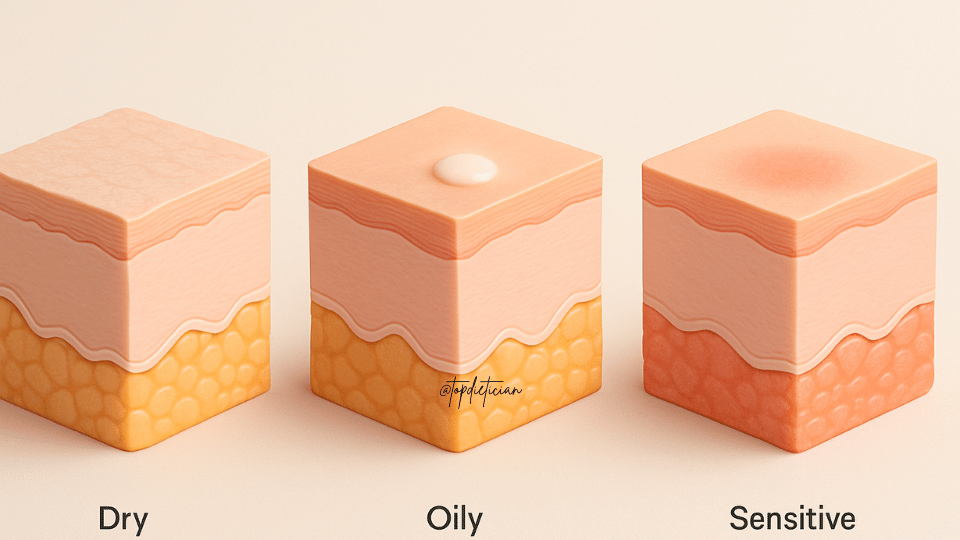
This part speaks to real skin struggles. It keeps things clear. It cuts out guesswork. It helps you match your skin to the right cleanser fast.
Dry Skin — CeraVe Hydrating or Cetaphil Gentle?
Dry skin breaks easily. Dry skin needs the right texture.
CeraVe Hydrating feels rich.
- It brings back missing ceramides.
- It helps the skin hold water longer.
Cetaphil Gentle feels lighter.
- It calms skin that reacts fast.
- It works well for people who dislike thick textures.
Real Example:
If your skin feels tight after washing, CeraVe Hydrating helps more.
If your skin burns with most cleansers, Cetaphil Gentle stays kind.
Pro Tip:
Pair either cleanser with CeraVe moisturizer at night.
This boosts hydration while you sleep.
Oily & Acne-Prone Skin — CeraVe Foaming vs Cetaphil Daily Facial Cleanser
Oil and acne need control, not harsh stripping.
CeraVe Foaming Cleanser uses niacinamide.
- It reduces shine.
- It helps clear excess oil through gentle foam.
Cetaphil Daily Facial Cleanser is softer.
- It works better for people using strong acne treatments.
- It keeps the skin from feeling raw.
Real Example:
If benzoyl peroxide dries your skin, Cetaphil Daily feels safer.
If your T-zone drips oil by noon, CeraVe Foaming brings control.
Clogged Pores & Blackheads — CeraVe SA Wins Every Time
Blackheads form when oil hardens inside pores.
You need an exfoliating acid for this.
CeraVe SA Cleanser uses salicylic acid.
- It works inside the pore.
- It breaks down oil and dead skin.
Cetaphil does not offer salicylic acid cleansers.
Real Example:
Small bumps on the forehead smooth out fast with SA.
Oil plugs around the nose clear faster with CeraVe SA.
Sensitive, Red, Irritated Skin — Cetaphil Gentle Wins
Some skin stings with the slightest mistake.
Sensitive skin needs calm water-like cleansing.
Cetaphil Gentle Cleanser uses mild surfactants.
- It avoids foam.
- It leaves no burning or redness.
User Insight from Reddit:
“Cetaphil Gentle is the only cleanser that doesn’t burn my skin.” (Source: Reddit SkincareAddiction)
Real Example:
If sunscreen burns during removal, Cetaphil Gentle is safer.
Eczema & Barrier Damage — CeraVe Hydrating Wins Strong
Eczema weakens the skin barrier.
You need lipids that rebuild that wall.
- CeraVe Hydrating Cleanser delivers ceramides.
- It adds hyaluronic acid to hold water.
- It protects while it cleans.
Reddit Quote:
“My eczema flare improved in three days after switching to CeraVe Hydrating.” Source: Reddit EczemaSupport
Real Example:
If your skin cracks near the mouth or eyes, ceramides speed healing.
Product Comparison Table — CeraVe Cleanser vs Cetaphil
| Product | Best For | Key Ingredients | What It Fixes | Common User Complaints |
|---|---|---|---|---|
| CeraVe Hydrating Cleanser | Dry, eczema-prone skin | Ceramides, Hyaluronic Acid | Tightness, flakes, barrier damage | Too creamy for oily skin. |
| CeraVe Foaming Cleanser | Oily, acne-prone skin | Niacinamide, gentle foaming agents | Shine, clogged pores | Can dry out the barrier if overused. |
| CeraVe SA (Renewing) Cleanser | Texture, blackheads, body KP | Salicylic acid + ceramides, niacinamide | Bumps, congestion, rough texture | Too strong for very sensitive skin. |
| Cetaphil Gentle Cleanser | Very sensitive, reactive skin | Glycerin, mild surfactants, panthenol | Redness, irritation, tightness | Too mild to remove heavy sunscreen or makeup. |
| Cetaphil Daily Facial Cleanser | Oily / combination skin | Niacinamide, panthenol, mild surfactants | Shine control, surface oil | Not strong enough for deep acne. |
When I coach someone on skin health, I begin with simple truths.
Your cleanser choice determines how your skin behaves throughout the day.
This guide gives you clear steps that work for real skin, not theory.
Step 1 — Identify Your Skin Type
Understand your skin. It shows you what it needs.
- Dry: Tight, dull, flakes easily.
- Oily: Shiny forehead and nose.
- Combination: Oily T-zone, dry cheeks.
- Sensitive: Stings with harsh products.
- Acne-prone: Breaks out with clogged pores.
Short, clear, and based on real patterns seen in clinic work.
Step 2 — Identify Your Top Ingredient Need
Your ingredient choice decides how your skin responds to cleansing.
Dry → Ceramides + Hyaluronic Acid
These restore your barrier and hold water.
CeraVe Hydrating Cleanser delivers this blend well.
Oily → Niacinamide
Controls shine and supports balanced oil flow.
Works well in both CeraVe Foaming and Cetaphil Daily.
Acne → Salicylic Acid
Clears pores and removes trapped oil.
Strong choice when breakouts repeat.
Sensitive → Glycerin + Panthenol
These soothe angry skin fast.
Cetaphil Gentle Cleanser uses this mix well.
Every skin issue matches an ingredient. No guesswork.
Step 3 — Match Climate to Cleanser
Climate changes how cleansers feel on skin.
Choose the right texture for the air around you.
Humid → CeraVe Foaming or Cetaphil Daily
Light formulas prevent clogged pores.
Cold / Dry → CeraVe Hydrating
Rich texture protects the barrier from cold wind.
Hot but Dry → CeraVe Cream-to-Foam
Removes sweat without stripping skin.
This simple step stops most seasonal flare-ups.
Step 4 — Pair It With the Right Moisturizer
A cleanser does the cleaning.
Your moisturizer protects the work you just did.
CeraVe Moisturizer
Great for dry or damaged skin.
Ceramides rebuild your barrier after cleansing.
Works well with retinol users too.
Sensitive-skin moisturizers
Look for glycerin, panthenol, and petrolatum.
Avoid fragrance and essential oils.
These trigger redness in reactive faces.
For oily skin
Use lightweight gel creams.
They hydrate without heaviness.
Moisturizer choice locks your cleanser results in place.
Step 5 — Patch Test for 24 Hours
Never skip this step. It protects your skin.
- Apply a small amount behind your ear.
- Leave it untouched for 24 hours.
- Check for redness, burning, or bumps.
- If the area stays calm, the product is safe to start.
Patch testing saves people from reactions I see every week.
Real User Insights from Reddit & Quora (Honest Feedback)
Real voices matter. These words come from people who tested both cleansers on real skin issues. Their feedback helps you see patterns fast. Each quote reflects common themes shared across large threads. (Source: Reddit SkincareAddiction, Quora Skincare Communities)
Praise for CeraVe
- “Foaming cleanser cleared my nose blackheads in 2 weeks.”
Many users say oil control improved fast. This matches CeraVe’s niacinamide effect. - “Hydrating cleanser stopped the tight skin feeling.”
Dry skin users love how glycerin and ceramides calm irritation. - “Best cleanser after tret use.”
People using retinol share that CeraVe reduces burning.
Complaints About CeraVe
- “Foaming dried my cheeks.”
This appears often in mixed-skin reviews. Oily T-zones like it. Cheeks suffer. - “SA cleanser too strong for daily use.”
Users with sensitive skin struggle with salicylic acid.
This aligns with dermatology notes on exfoliation limits. - “Hydrating feels too creamy in humidity.”
Warmer climates prefer light cleansers. Heavy formulas feel sticky.
Praise for Cetaphil
- “The only cleanser that doesn’t sting after retinol.”
Sensitive users trust Cetaphil’s mild surfactants. Suitable for damaged skin. - “Daily Facial keeps oil down without burning.”
Oily skin users enjoy the balance. It cleans without stripping. - “Helps calm redness fast.”
Reviews mention less irritation in just days.
Complaints About Cetaphil
- “Too mild to remove sunscreen.”
Many say they need a second cleanse. The formula is gentle, not potent. - “Doesn’t help acne at all.”
Users expecting treatment results feel disappointed.
Cetaphil cleans but does not target acne. - “Feels slippery and doesn’t rinse clean.”
A common note from oily skin reviewers.
How Cleanser Choice Affects Your Whole Routine
Your cleanser sets the tone for your entire routine. It controls how your skin feels after every wash. It also decides how well the following steps work. I teach clients this truth every day. When the first step is wrong, every product after that struggles.
Best Night Skin Care Routine for Dry Skin
Dry skin needs steady support. It loses water fast. It cracks under cold air. So a simple night routine works best.
1. Cleanse: CeraVe Hydrating Cleanser
- Creamy texture supports the barrier.
- Ceramides calm tight skin.
- No foam, so no moisture loss.
2. Moisturize: CeraVe Moisturizer
- Rich formula holds water in the skin.
- Works well after any hydrating step.
3. Hydration boost: Hyaluronic Acid Product
- HA binds water fast.
- Perfect for routines that need a surge of moisture.
- Connects naturally to the hyaluronic acid serum recipe search trend.
4. Barrier seal: Oil or Occlusive
- Locks moisture in place.
- Stops night-time water loss.
- Helps skin stay soft until morning.
I give this exact routine to clients with dry, winter-damaged skin. It works because each product supports the last one.
How Makeup Style Affects Cleanser Choice
Your cleanser choice also shapes how makeup behaves on your skin. Different makeup styles need different cleansers.
Foaming cleansers remove heavy or oil-based makeup fast.
- They cut through layers of foundation.
- They lift long-wear pigments with ease.
- Good when you use bold looks or waterproof mascara.
- Best choice for people who wear eye makeup for close set eyes, since that style needs clean lids.
Gentle cleansers protect the eye area.
- The skin near the eyes is thin.
- It tears fast with harsh rubbing.
- A mild cleanser helps keep that skin calm.
- Great for natural makeup days or minimal routines.
Think of cleansers like tools. Use the one that fits your makeup style. Heavy makeup needs strength. Light makeup needs care.
FAQs
Is CeraVe cleanser better than Cetaphil?
CeraVe works better for dry, damaged, or irritated skin.
Its ceramides repair the barrier and hold water longer.
Cetaphil suits oily and reactive skin that dislikes heavy textures.
Both are strong formulas, but CeraVe supports barrier repair more effectively.
Which cleanser is safer for sensitive skin?
Cetaphil Gentle Skin Cleanser is safer for sensitive skin.
It uses mild surfactants and avoids strong actives.
It rarely stings, even after exfoliation or retinol use.
CeraVe Hydrating Cleanser is close, but its richer texture bothers some users.
Which works best for acne?
CeraVe Foaming Cleanser works best for acne.
Niacinamide calms oil.
A gentle foam lifts buildup without tearing the barrier.
If blackheads or bumps are present, CeraVe SA Cleanser works even faster.
Cetaphil suits mild acne but lacks pore-clearing ingredients.
Can I use a CeraVe cleanser and Cetaphil moisturizer?
Yes, this pairing works well.
CeraVe cleans without stripping.
Cetaphil moisturizes lightly and keeps skin calm.
Great choice for oily or acne-prone skin where heavy creams feel too rich.
Which cleanser removes sunscreen better?
CeraVe Foaming Cleanser removes sunscreen better.
Its foam breaks down oils and filters fast.
Cetaphil needs more rubbing and leaves a light film.
For heavy sunscreen, double cleansing works best: oil first, then CeraVe Foaming.
Pingback: Best Night Skin Care Routine for Dry Skin (Derm-Approved 2026 Guide) - topdietician.com